
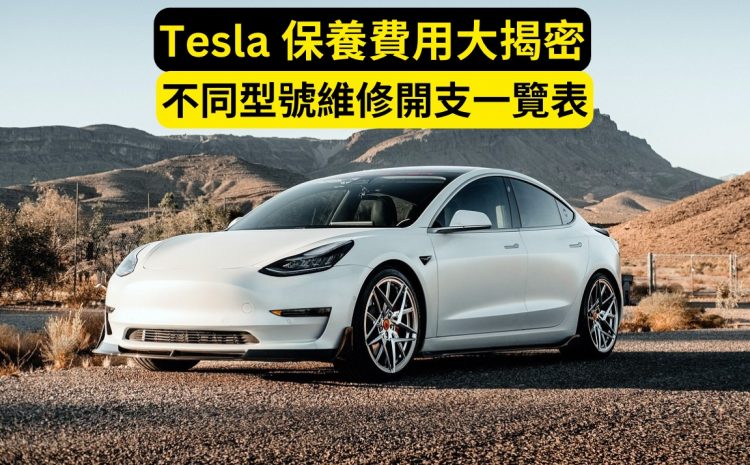
Tesla Maintenance Costs Revealed: Repair Expenses by Model at a Glance
Many owners assume electric vehicles need no maintenance, but in reality Tesla’s maintenance and repair costs are far from negligible. From tyres and braking systems to air-conditioning filters, every detail affects driving safety and vehicle lifespan. What’s more, repair costs vary considerably between models (Model 3, Model Y, Model S and Model X), which leaves many owners scratching their heads. This article provides an in-depth analysis of Tesla EV maintenance and common repair items, with actual cost ranges to help you prepare your budget properly.
Do Tesla electric vehicles need maintenance?
Many owners choose Tesla electric vehicles precisely for ‘fuel savings’ and ‘low maintenance’, but do electric vehicles really need no maintenance? The truth is:Although Tesla does away with traditional engine oil, spark plug replacement and similar issues, there are still several maintenance items that cannot be ignored. If regular inspections are neglected, vehicle performance will gradually decline and safety may even be affected. Below, we analyse Tesla’s key maintenance points in detail to help you understand the truth about EV care!
The biggest maintenance differences between electric and traditional cars
As a leading EV, Tesla’s most obvious maintenance difference lies in ‘No internal combustion engine-related repair items’. Compared with traditional petrol cars, Tesla does away with the following common procedures:
| Traditional car maintenance items | Tesla Required? | Notes |
| Oil change (Engine Oil) | ❌ Not required | The electric motor requires no lubricating oil |
| Spark plug / belt replacement | ❌ Not required | The electric motor has no such parts |
| Gearbox oil (Transmission Oil) | ❌ Not required | No traditional gearbox structure |
| Coolant check (Coolant) | ✅ Partially required | Some models still have a battery coolant circulation system |
| Software updates | ✅ Regular updates required | Automatic OTA updates improve features and fix bugs |
Summary:
Although Tesla has reduced many traditional maintenance items, as a car that is driven daily and exposed outdoors for long periods,tyres, brakes, air-conditioning systems and more still need regular maintenance, to maintain safety, comfort and service life.
Common maintenance items for Tesla owners
Even without an oil change, Tesla electric vehicles still have several ‘high-frequency must-do items’, and the following are the four most common maintenance tasks:
✅ Tyre condition checks and replacement (including inflation system TPMS)
- Hong Kong road conditions include many slopes and sharp bends, so tyres wear more quickly
- TPMS (Tyre Pressure Monitoring System) failure can affect driving safety
- Recommended to inspect every 15,000 km, replace a full set of tyres every 3–4 years
✅ Brake fluid replacement (Brake Fluid)
- Although Tesla has a regenerative braking system (Regenerative Braking), the physical brakes will still wear
- It is recommended to replace the brake fluid every 2 years
- Some owners ignore brake noises, which can delay necessary repairs
✅ Air conditioning filter (HEPA / Cabin Filter)
- Hong Kong has high humidity and many pollution sources (such as 5)
- It is recommended to replace the air conditioning filter every 12 months to keep the air fresh and prevent odours
✅ Battery health check (Battery Health Check)
- For Teslas that have driven over 60,000 km, regular battery health checks are key to preserving value
- Checks include battery capacity degradation, BMS data, cooling system performance and more
Further reading:“Tesla Battery Failure: What to Do? Battery Replacement Costs and Lifespan Analysis”
Official recommended intervals vs actual usage habits
Tesla’s official website provides a recommended maintenance schedule (Maintenance Schedule), but actual usage conditions in Hong Kong may differ:
| Maintenance item | Tesla Official recommended interval | Recommended interval for Hong Kong (based on road conditions) |
| Air conditioning filter | Every 2 years | ✅ Annually (recommended) due to high humidity and pollution |
| Brake fluid | Every 2 years | ✅ Every 1.5–2 years (frequent braking on slopes) |
| Tighten chassis bolts | Every 3 years | ✅ Depends on whether the car is frequently driven on mountain roads or concrete surfaces |
| OTA Software update | Automatic updates (depending on version) | ✅ Recommended to check the settings monthly for major feature updates |
🔎 Real case sharing:
A Model Y owner did not replace the air conditioning filter regularly, and as a result odours appeared in the cabin. The cause was found to be mould accumulation in the air conditioning system, and a deep clean was ultimately required. The cost was far higher than simply replacing the filter!
📌 Summary: Tesla electric vehicles are not “something you can ignore”
Although Tesla has done away with the heavy mechanical repairs required by traditional petrol cars, electric vehicles still need careful maintenance.Regular checks of the brakes, tyres and battery health can effectively extend the vehicle’s lifespan and improve driving safety.
🛠 WhatsApp Us Now Book a free inspection with Master Wah 🚗, to understand the actual maintenance condition — no need to guess!
Maintenance Cost Comparison Across Models (Model 3 / Y / S / X)
Tesla electric vehicles vary noticeably in maintenance and repair costs depending on the model. From the entry-level Model 3, to the mid-range SUV Model Y, and up to the high-end flagship Model S / X,each model differs in parts pricing, repair frequency and common issues. As a Tesla owner or prospective buyer, understanding the relevant cost budget helps you plan ahead and avoid sudden high expenses.
Estimated Maintenance and Repair Costs for Model 3
As Tesla’s most popular entry-level model,Model 3 offers lower maintenance costs and good reliability. However, routine maintenance should not be overlooked:
| Item | Estimated Cost (HKD) | Notes |
| Tyre Replacement (four tyres) | $4,000 – $5,000 | Recommended replacement every 30,000 kilometres |
| Cabin Air Filter Replacement (annually) | $600 – $800 | HEPA filter upgrade available as an option |
| Brake Fluid (every two years) | $800 – $1,000 | Can be combined with a brake system inspection |
| OTA software update | Free | Tesla releases automatic updates regularly |
| Door Sensor Repair (minor faults) | $1,000 – $2,500 | It depends on the faulty component and the repair method |
Further reading:“How Do You Choose a Tesla Repair Centre? Comparing Official and Third-Party Options in Hong Kong”
Model Y Maintenance Features and Common Repair Items
The Model Y has an SUV structure and, compared with the Model 3, its body is heavier and its ride height higher, sotyres, suspension and braking systems wear out faster. Some owners also report specific common issues.
| Item | Estimated cost (HK$) | Notes |
| Brake fluid replacement (every two years) | Approx. $1,000 | Regenerative braking reduces brake pad wear, but the fluid still needs changing |
| Tyre pressure monitoring system (TPMS) replacement | Approx. $2,000 | Sensor errors or failures can sometimes occur |
| Resolving rear suspension noise | Approx. $1,500 – $3,000 | Common when driving over bumpy roads or steering while parked; regular inspections are recommended |
| Cabin air-conditioning system cleaning | Approx. $800 – $1,200 | If odours occur, a deep interior clean is recommended |
Are Model S / X Repairs More Expensive? Breaking Down the Differences in Parts and Labour
Tesla’s higher-end models, the Model S and Model X, offer luxurious features and strong performance, but the corresponding repair and parts costs are also higher.
| Item | Estimated cost (HK$) | Description |
| Door sensor module (automatic door failure) | $3,000 – $6,000 | Especially common on the Model X falcon wing doors |
| MCU screen replacement | $8,000 – $12,000 | A faulty centre console unit can affect the reversing camera, navigation and air-conditioning controls |
| Air suspension fault repair | $10,000+ | Common luxury car repair items, which are high-cost and require professional handling |
| Brake system (big disc/caliper replacement) | $5,000 – $8,000 | Easily worn during high-speed driving or on mountain roads; some parts need to be ordered in advance. |
📍 Compared with equivalent luxury cars, although Model S/X have higher repair costs, their advantages in saving fuel and reducing carbon emissions remain attractive.
📌 Key takeaway: Understand maintenance costs before and after choosing a car
Whether you are about to buy a Tesla or already own one, understanding the common maintenance items and costs of different models helps you:
- Plan vehicle expenses effectively
- Identify potential issues early
- Avoid repair traps or being overcharged
🚗 Don’t want to be caught out? Ask Master Wah for free maintenance advice on WhatsApp!
👉 Click here to chat now 📲
Common repair scenarios and budget reference
Even though Tesla electric vehicles have a simplified mechanical structure, electronic components or sensor systems can still fail in daily driving. According to the real-world experience of Hong Kong car owners, the following three repair scenarios are the most common repair requests. Whether it is a centre console black screen, a door control sensor failure, or abnormal charging, it is advisable to deal with them as soon as possible to avoid affecting driving safety or userexperience.
Door sensor failure (common on Model X)
Tesla’s automatic door design enhances the sense of technology and convenience,but if the sensor module or electronic control mechanism fails, it may result in doors not opening or closing properly, especially the Model X ‘Falcon Wing Doors’ are more complex and require more regular inspection and maintenance.
Common symptoms:
- Doors fail to close automatically or repeatedly bounce open
- Sensor malfunction / failure to detect obstacles
- Unusual noises when opening or closing, or delayed response
🛠 Budget reference:
about $2,000–$4,000
🔧 Repair items may include: control module inspection, door control sensor replacement, plug/wiring inspection, etc.
📍 Professional advice: If you notice unstable door control or unusual noises, it is advisable to have it checked early to prevent mechanical damage from delay.
Further reading:What should new Tesla drivers watch out for? Maintenance, insurance and charging explained
Screen / centre console system damage (MCU failure)
Although Tesla’s large centre console screen is intuitive to operate, with long-term use or exposure to high temperatures,MCU(main control unit) may fail due to capacitor aging or storage device failure, affecting navigation, reversing camera, air conditioning control and other functions.
Common fault symptoms:
- Screen blackouts or flickering
- Air conditioning malfunction / touch delay
- Audio or navigation system restart or failure
- OTA update failure
🛠 Budget reference:
Approximately $6,000–$12,000
Depending on the model and MCU version (MCU1 / MCU2 / AMD), costs vary.
📌 Items included in the cost:
- Main control module (MCU) replacement
- System reinstallation / pairing
- Data backup and transfer (if applicable)
📍 Expert tip: If the screen occasionally restarts or stutters, this is an early sign of MCU failure and should be checked immediately,to avoid a total failure that requires replacing the entire unit.
📩 Have a problem and not sure what to do? WhatsApp now Get our Wah Gor to take a look for you ✅
Charging port faults or charging abnormalities
Many Tesla owners report that the charging port or CCS connector can suffer from poor contact, flashing red lights, intermittent charging and similar issues,This kind of problem may involve a hardware module or wiring abnormality.
Common symptoms:
- Flashing red light after inserting the charging gun (charging refused)
- Unstable fast charging support, limited charging speed
- Loose plug or difficulty connecting it
- Charging interruption error message (Charging Error)
🛠 Budget reference:
Approximately $1,500–$3,000
Common repair items include:
- Charging plug module replacement (external port)
- Cleaning / tightening of earthing contact points
- Inspection of the in-vehicle charging control module
A quick reminder:If you frequently use public charging / fast-charging stations, contact wear occurs faster, regular checks can prevent unexpected interruptions or damage risks.
📌 Summary: Common Tesla repair issues — don’t wait until something breaks!
Many Tesla owners are in the habit of ‘if it isn’t broken, don’t bother’, but in fact, when an electric vehicle develops minor abnormalities,are often a sign of major damage. Whether it is an MCU fault, a door control failure or a charging failure, an early inspection can save you thousands to tens of thousands of dollars in repair costs.
📞 Enquire now on WhatsApp → Have a free consultation with Wah Gor, who will inspect your car before giving you a quote
🔗 Further reading
- [Beginners’ must-read] How often does a Tesla need servicing? 3 key points you need to know
- Tesla standard warranty vs. extended warranty: which option is best for you?
- Avoid wasting money! 5 common misconceptions about extending your Tesla warranty