
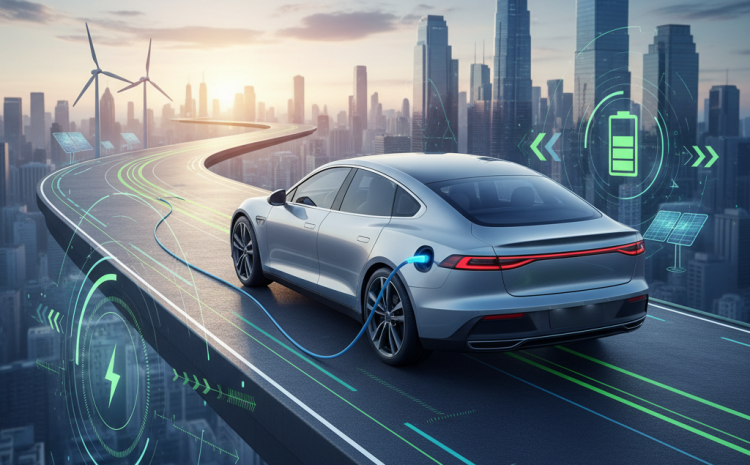
Electric Vehicle Range Testing and Improvement Methods | Everyday Driving Energy-Saving Guide
Driving an EV in Hong Kong, many owners share the same concern: how can you maintain range when stuck in traffic, during black rainstorms, or even when running the air conditioning for long periods? Tunnels in Kowloon and on Hong Kong Island are congested every day, and with hot summers, air conditioning is almost essential, so range naturally takes a big hit. Many owners worry about ‘running out of battery if they’re not careful’, notonly does it affect daily commuting, but it can also increase charging costs and time pressure.
This article will take a deep dive into real-world EV range test results and provide practical energy-saving methods for Hong Kong’s local driving environment. Whether you’re a Tesla owner or drive another brand of EV, the following methods can all help extend battery life, reduce unnecessary energy consumption, and save money while giving you peace of mind.
Hong Kong EV Range: Current Situation and Challenges
In recent years, Hong Kong’s electric vehicle (EV) market has developed rapidly, and Tesla, BYD and other brands have become common choices on the streets. Although EVs bring environmental and energy-saving benefits, ‘range’ remains one of the issues owners care about most. Hong Kong’s unique urban environment—such as traffic congestion in Kowloon and on Hong Kong Island, prolonged air conditioning use, plushumid and rainy weather—all directly affect EV performance. The following sections will analyse Hong Kong’s current market situation and the practical challenges owners face in daily life.
Hong Kong EV Adoption and Market Data
The pace of EV adoption in Hong Kong is astonishing. According to Transport Department data, EV registration numbers have risen year on year over the past five years, with Tesla still the market leader, followed by BYD and other European brands.
The reasons driving this include:
- The government’s ‘One-for-One Replacement’ scheme, where replacing an old car with a new EV qualifies for a tax concession, greatly lowers the entry threshold.
- Public charging facilities have increased year by year. Although their distribution is uneven, they are considerably more convenient than five years ago.
- Rising consumer environmental awareness, combined with fluctuating fuel prices, has led more people to consider EVs as a long-term investment.
However, the most common concern among owners remains: ‘Is the range enough for my daily commute? And what about long-distance trips?’
| Item | Data / Situation |
|---|---|
| Total registered EVs | Approximately 70,000 units or more |
| Most popular brand | Tesla, BYD, BMW |
| Total number of public charging points | More than 6,000 |
| Distribution | Concentrated in Kowloon and on Hong Kong Island, with fewer in the New Territories |
| Most common concerns among car owners | Range, competition for charging points, and repair costs |
To find out more about Hong Kong’s latest EV policies, please refer to official data from the Hong Kong Transport Department.
Impact of daily driving conditions in Kowloon and Hong Kong Island on range
Hong Kong’s unique driving environment has a profound impact on EV range. Traffic pressure in the urban areas of Kowloon and Hong Kong Island is particularly high:
- Frequent traffic jams: Rush-hour congestion during morning and evening peaks is routine, especially on major routes such as the Cross-Harbour Tunnel, Eastern Harbour Crossing and Western Harbour Crossing. Long periods of stop-start driving consume more electricity than high-speed driving.
- Mainly short journeys: Most driving in Hong Kong consists of short journeys with low speeds and frequent acceleration and braking, so energy consumption naturally rises.
- Frequent uphill and downhill gradients: On routes such as Mid-Levels and around Victoria Peak, uphill gradients consume a large amount of battery power; although downhill sections recover energy, this cannot fully offset the consumption.
- Differences between urban driving and highway driving: Average vehicle speeds in Hong Kong’s urban areas are noticeably lower than on highways, leading to a discrepancy between actual energy consumption and manufacturer-quoted range.
If you would like to read more analysis of ‘urban driving and range differences’, you can refer to the article on our website about energy-saving EV driving techniques.
Challenges that Hong Kong’s weather (hot summers and rainy seasons) poses to battery consumption
Hong Kong has a subtropical monsoon climate, and the weather has a very noticeable effect on EV range:
- Hot summers: Summer lasts up to half the year, and with air conditioning running for long periods, the air-conditioning system becomes one of the biggest sources of power consumption.
- High humidity: As well as cooling, the air conditioning also has to dehumidify continuously, which further increases electricity consumption.
- Rainy weather: ‘Black Rainstorm’ and ‘Mangkhut’-scale storms are common; if drivers encounter standing water, the battery modules may be affected by moisture, impacting performance and even safety.
- Low winter temperatures: Although winters in Hong Kong are not severe, low temperatures can still reduce battery efficiency and further shorten range.
| Weather conditions | Influencing factors | Change in range |
|---|---|---|
| Hot summer weather | Prolonged air conditioning and dehumidification | -15% to -25% |
| Humid and rainy | Air conditioning dehumidification, water wading risk | -10% to -20% |
| Low winter temperatures | Battery chemical reactions slow down | -5% to -10% |
Further reading:Hong Kong Observatory weather data, to understand climate trends and help car owners plan their journeys better.
Recommended actions
Although Hong Kong’s EV market is developing rapidly, range challenges still exist. Owners are advised to:
- Plan your route before travelling and pay attention to charging station locations.
- In summer, try to keep the air conditioning temperature at 24–25°C.
- Regularly check the battery’s sealing and water resistance to ensure safety.
Want to know more practical ways to improve range?
Core range concepts and real-world testing methods
To truly understand the range performance of electric vehicles in Hong Kong, you first need to understand the basic principles behind it and real-world testing methods. Many car owners only look at the official rated mileage when buying a car, but actual driving results often differ greatly. By breaking down the definition of “range”, the influencing factors, and local Hong Kong real-world test data, we can better understand why EV performance may not match the manufacturer’s figures, and we can also find ways to improve it, making daily driving more reassuring.
What is electric vehicle range? A simple explanation of the principles
“Range”, put simply, is the maximum distance an electric vehicle can travel after a full charge. Official figures are usually obtained from standard laboratory tests, such as WLTP (Worldwide Harmonised Light Vehicles Test Procedure) or NEDC (New European Driving Cycle). These tests are conducted in controlled environments, with simple road conditions and limited air conditioning use, so the results are generallymore optimistic than real-world driving.
The core basis for calculating range is:
- Battery capacity (kWh): like how large the fuel tank is.
- Energy consumption (Wh/km): that is, how much electricity is used per kilometre, similar to fuel consumption.
For example: an electric vehicle with a battery capacity of 60kWh, if its average energy consumption is 150Wh/km, the theoretical range is approximately 400 kilometres. However, in real Hong Kong conditions, factors such as traffic jams, air conditioning, and inclines mean the actual mileage is often reduced by 15%–30%.
To learn more about the difference between WLTP and real-world driving, please refer to official EU WLTP test data.
Common influencing factors: speed, air conditioning, battery health
The range performance of electric vehicles in Hong Kong is often closely tied to the following major factors:
- Vehicle speed: At high speeds, aerodynamic drag increases and energy consumption rises sharply; however, in congested traffic, prolonged idling plus stop-start driving can be equally demanding on battery power.
- Air conditioning system: Hong Kong summers are hot and humid, so air conditioning is left running almost all year round. Data shows that air conditioning can account for 10%–20% of total energy consumption.
- Battery health (SOH): As time passes and the number of charging cycles increases, battery capacity gradually declines, so range naturally decreases.
- Driving habits: Rapid acceleration and sudden braking consume more energy; by contrast, smooth driving helps to extend range.
- Vehicle weight and load: Carrying more passengers or heavy loads will noticeably increase power consumption.
| Influencing factor | Degree of impact on range | Description |
|---|---|---|
| High-speed driving | Medium to high | Aerodynamic drag increases significantly |
| Stop-and-go congestion | High | Air conditioning + energy waste |
| Air conditioning kept on | Medium to high | Especially noticeable in Hong Kong summers |
| Battery degradation | Medium | Capacity decreases year by year |
| Driving habits | Medium | Harsh acceleration is particularly energy-intensive |
Hong Kong real-world data: tunnel congestion, uphill and downhill sections, long-distance driving
Hong Kong’s terrain and traffic conditions create a significant gap between real-world range and official figures. The following are some real-world scenarios:
- Tunnel congestion: When stuck in traffic for long periods in the Cross-Harbour Tunnel or Eastern Harbour Crossing, low speeds and air conditioning running throughout mean energy is consumed faster than on the motorway.
- Uphill and downhill slopes: On routes such as the Mid-Levels and Clear Water Bay, uphill energy consumption is extremely high; although downhill driving recovers energy, this only partially offsets it.
- Long-distance motorway driving: Driving from the New Territories to Hong Kong Island entirely on the motorway offers relatively stable range. However, air conditioning remains the main source of energy consumption.
Research and owner test results show that real-world range in Hong Kong is generally 15% lower than official figures.–30%. For example: Tesla Model 3 has an official range of approximately 500 km, but in real-world driving in urban Hong Kong, it is usually only 350–400 km.
Recommended Actions
Understanding the principles of range and local real-world testing is crucial for car owners. We suggest:
- Before buying an electric vehicle, do not rely solely on official data; look at local real-world tests.
- In everyday driving, get into the habit of accelerating smoothly and using the air conditioning sensibly.
- Regularly check battery health (SOH) to spot degradation early.
Want more practical tips for improving EV range in Hong Kong? Download our free guide now to help you save energy and go further!
Common Pain Points and Solutions for Hong Kong Car Owners
Although electric vehicles are becoming increasingly common in Hong Kong, many owners still encounter practical issues in everyday driving. The most common scenarios are leaving the air conditioning running during urban traffic jams, which causes range to fall sharply; battery degradation in second-hand EVs, bringing potential repair costs; and the uneven distribution of charging stations, which leaves many drivers with “range anxiety”. Below, we will break downthese pain points and provide solutions tailored to Hong Kong’s environment.
How do you deal with “traffic jams + air conditioning = rapid battery drain”?
Hong Kong drivers face a unique challenge: traffic congestion plus running the air conditioning for long periods. This is especially true at the Cross-Harbour Tunnel, Eastern Harbour Crossing, Western Harbour Crossing and Lion Rock Tunnel, where long periods of stop-and-go traffic with the air conditioning running throughout mean that short journeys can actually consume more electricity than highway driving. Many owners report: “I was only driving from Mong Kok to Admiralty, yet the battery level dropped very quickly,” which creates considerable psychological pressure.
Solutions:
- Optimise the air conditioning settings: Set the temperature to 24–25°C, and use “recirculation mode” to significantly reduce the compressor load.
- Make good use of the Eco energy-saving mode: Many electric vehicles have an “Eco” function that can automatically reduce air conditioning power.
- Drive smoothly: Avoid sudden acceleration to reduce unnecessary energy consumption.
- Plan ahead: If you know you will be passing through congested sections, make sure the battery is sufficiently charged before setting off, so you can avoid “worrying about running out of power while stuck in traffic”.
Battery degradation issues in used electric vehicles
Hong Kong’s second-hand electric vehicle market has been very active in recent years, with frequent transactions in models such as Tesla and BYD. However, battery health (SOH) is the key factor affecting range. As time passes and charging cycles increase, battery capacity gradually declines, causing the actual mileage to fall well below the official figure. If the entire battery pack has to be replaced, the cost often reaches hundreds of thousands of Hong Kong dollars, which for second-handcar owners is a great strain.
Solutions:
- Pre-purchase inspection: A professional battery health check is essential, covering capacity testing and module voltage inspection.
- Regular checks: Even after buying the car, you should carry out an SOH test once a year to catch degradation early.
- Module-level replacement: You do not necessarily need to replace the whole battery pack; some professional repair centres can replace only the faulty modules.
- Choose an experienced repair centre: Avoid being pushed into a “full OEM replacement” — this saves money while ensuring safety.
| Repair method | Estimated cost | Applicable situation |
|---|---|---|
| Full battery pack replacement by the manufacturer | $200,000+ HKD | Severe degradation / under warranty |
| Partial module replacement | $30,000–$60,000 | Issues with some modules |
| Regular testing + maintenance | $2,000–$5,000 per session | Preventive maintenance |
Inadequate charging station coverage: how to reduce “range anxiety”
Another of the most common pain points for Hong Kong drivers is the uneven distribution of charging stations. Although the total number of charging points across Hong Kong has increased year on year, they are concentrated in Kowloon and Hong Kong Island, while the New Territories — especially remote areas — still falls short. On top of that, parking facilities at some shopping malls or residential estates are often full, leaving drivers worried that there will be nowhere to charge when they reach their destination.
Solutions:
- Make good use of mobile apps: Apps such as CLP, HK Electric and the Tesla app let you check charging point status in real time.
- Install a home charger: If you have a private parking space, installing a 7kW slow charger is the most convenient option for day-to-day use.
- Route planning: Before setting off, include charging stations along the route in your journey plan to avoid running out of power unexpectedly.
- Keep a charge buffer: Try to keep 20–30% state of charge as a safe threshold, reducing anxiety.
| App Name | Key Features |
|---|---|
| CLP ‘Easy Charging’ | Covers multiple locations in the New Territories and Kowloon |
| HK Electric | High coverage on Hong Kong Island |
| Tesla App | Real-time information on dedicated Tesla Superchargers |
| ChargedHK | Community sharing of charging point usage |
Further informationYou can refer to the Government’s New Energy Vehicle Charging Facilities Map.
Recommended Actions
While Hong Kong EVs are convenient and eco-friendly, range and charging issues remain the biggest pain points for owners. We recommend the following:
- Plan your route before setting off and use the air conditioning sensibly.
- Before buying or selling a used car, you must carry out a battery health check.
- Make good use of charging apps and consider installing a home slow charger.
Want to solve your EV range headaches? Simply WhatsApp our team, for a free enquiry about battery testing and charging solutions!
Practical Ways to Save Energy in Everyday Driving
For Hong Kong EV owners, range depends not only on battery capacity but also on driving habits and routine maintenance. Often, just a few small adjustments can effectively extend range and reduce unnecessary power consumption. Below are some of the most practical everyday energy-saving tips, tailored to Hong Kong’s urban driving environment, that owners can apply straight away.
Driving Habit Adjustments: Smooth Acceleration, Less Hard Braking
Rapid acceleration and hard braking are the great enemies of power consumption. When caught in urban traffic congestion in Kowloon and on Hong Kong Island, if you frequently accelerate in a “zero to hundred” style, the battery’s energy will be rapidly consumed and range will fall significantly.
To improve this, owners should develop the following habits:
- Maintain smooth acceleration and avoid suddenly pressing the accelerator pedal hard.
- Anticipate road conditions in advance and reduce frequent hard braking.
- Make good use of Eco mode to give the car a more linear response, which is particularly suited to city driving.
These small changes can distribute energy more evenly, and are especially effective in traffic.
Air Conditioning Energy-Saving Tips: Recirculation + Sensible Temperature Settings
Hong Kong summers are hot and humid, so keeping the air conditioning on is almost essential, but it is also one of the biggest power drains in an EV. Research shows that air conditioning’s share of total energy consumption can be 10%–20%.
Owners can take the following steps:
- Set the temperature at 24–25°C, to avoid it being too cold.
- Use recirculation mode to keep the cabin cool while reducing the load on the air-conditioning compressor.
- Avoid leaving the air conditioning running while parked for long periods; for example, when waiting for someone, switch off the vehicle and step out where possible.
Through these methods, you can reduce 10–20% power consumption, making it particularly suitable for long waits at red lights or in traffic jams.
Make the most of the energy recovery system (Regenerative Braking)
Many car owners may not make full use of the energy recovery system, meaning energy is wasted when decelerating or going downhill.
To maximise the benefits:
- Anticipate the road ahead, lift off the accelerator early, and let the vehicle decelerate automatically and recover energy.
- In stop-start city driving, try using ‘one-pedal driving’ mode to reduce reliance on the brakes.
- Reducing conventional brake use not only saves electricity but also reduces brake pad wear.
| Driving style | Energy consumption | Brake pad life |
|---|---|---|
| Conventional driving | Higher | Wears out quickly |
| Energy recovery driving | Lower | Longer lifespan |
Routine maintenance: tyre pressure, chassis inspection, battery health check
Many Hong Kong car owners focus on charging but overlook routine maintenance; in fact, these details can have a significant impact on range.
- Tyre pressure: Maintaining the correct tyre pressure is key to reducing rolling resistance. Insufficient tyre pressure increases energy consumption and also affects driving safety.
- Chassis and suspension inspection: Ensures optimal vehicle operating efficiency and reduces unnecessary resistance.
- Battery health check: Regularly test capacity and module condition to detect degradation early and avoid sudden failure.
In the long run, these checks can maintain energy efficiency, extend battery life and reduce unexpected repair costs
Recommended actions
Hong Kong car owners can significantly improve their range and save money simply by putting the above methods into practice in their daily driving:
- Drive smoothly and reduce sudden acceleration and braking
- Set the air conditioning sensibly to avoid excessive power consumption
- Make good use of the energy recovery system
- Maintain the vehicle and battery health regularly
Want professional inspections and energy-saving advice? Now WhatsApp our team, for a free enquiry about battery health checks and maintenance plans, helping you save power and travel with peace of mind!
Battery life extension strategies (suitable for Hong Kong conditions)
The battery is the “heart” of an electric vehicle, accounting for the largest share of its overall cost. For Hong Kong car owners, extending battery life and slowing the rate of degradation is not only connected to range, but also directly affects vehicle value and daily running costs. Because Hong Kong’s environment is unique—persistently hot and humid, with frequent traffic congestion in urban driving, and occasional flooding during black rainstorms—carowners need to adopt appropriate maintenance strategies even more. Below, we share a few of the most practical methods to help you use the battery more durably and avoid high repair or replacement costs.
Avoid long-term fast charging; switch to slow charging to protect the battery
Fast charging is convenient, but relying on it long-term keeps battery temperature high for extended periods, accelerating the decline caused by internal chemical reactions. Many Hong Kong car owners, in their haste for speed, are used to fast charging every day, but in the long run battery life will be greatly shortened.
Recommended practices include:
- On ordinary days, use home slow charging or standard charging as much as possible, and only use fast charging when necessary.
- Keep the charging range at 20%–80%, avoid regularly charging to 100%.
- Avoid leaving it plugged into a fast charger for long periods without unplugging, because overcharging and high temperatures accelerate ageing.
| Charging method | Convenience | Impact on battery | Recommended use case |
|---|---|---|---|
| Fast charging | High | Prone to heat build-up and accelerated degradation | Long journeys, occasional needs |
| Slow charging | Medium | Effectively protects the battery | Daily home use, overnight charging |
Battery module inspection and replacement when necessary (Tesla Repair Kowloon case study)
Many car owners assume that battery degradation means the whole battery pack must be replaced, but in fact it is often only some modules that are faulty. If the whole battery is replaced outright, the cost can easily exceed HK$200,000, which is a considerable burden for car owners.
In fact, regular battery health checks (including capacity testing and module voltage checks) can identify problems early. Onceabnormal modules are detected, a professional repair centre can provide module replacement services, with no need to scrap the entire battery pack.
Tesla Repair Kowloon Case Study: One car owner was quoted for a full pack replacement due to battery degradation, but after a professional inspection, only a few of the modules needed replacing; the repair cost fell significantly from over two hundred thousand to tens of thousands, saving the vast majority of the cost.
Protective measures for wading through water in rainy weather
Hong Kong is rainy, and black rainstorms, torrential downpours and even typhoon flooding are not uncommon. Wading through water poses a major risk to EV battery modules; once water enters, it can cause short circuits, corrosion and even safety hazards.
Owners should note the following points:
- Avoid driving into clearly flooded road sections, especially low-lying areas such as rural parts of the New Territories or some older districts on Hong Kong Island.
- During maintenance, check the sealing condition of the battery base plate and apply waterproofing treatment if necessary.
- If you suspect any abnormality after wading through water (for example, an unusual drop in range or a dashboard warning light), have the vehicle inspected immediately to prevent the problem from worsening.
For more information on local weather and flooding, please refer to the Hong Kong Observatory’s flood prevention guidelines.
Recommended actions
Battery life directly affects an EV’s range and value. Hong Kong owners can significantly extend the battery’s service life simply by paying attention to charging habits, carrying out regular health checks and taking waterproofing measures.
Want to ensure your battery stays in optimal condition? Now WhatsApp us, to enquire free of charge about battery testing and repair options, helping you save money while ensuring safety!
Future trends in EV range
As Hong Kong’s EV market continues to grow, range is no longer merely a ‘pain point’ for existing owners; it is also a development priority driven jointly by the industry and the government. In the coming years, with breakthroughs in next-generation high-efficiency battery technology, the gradual upgrading of local charging infrastructure, and the application of AI energy management systems, Hong Kong owners can look forward to longer range, fastercharging and a smarter driving experience. Below, we break down some of the most noteworthy trends to help you keep pace with future developments.
Next-generation high-efficiency battery technology (solid-state batteries, etc.)
At present, most EVs on the market use lithium batteries, but their energy density is limited, and long-term reliance on fast charging accelerates degradation. Over the next few years, battery technology is expected to achieve major breakthroughs:
- Solid-state batteries: higher energy density, faster charging and greatly improved safety (reducing the risk of fire).
- Silicon-based anode batteries: capacity is further increased, giving longer range.
- Fast-charging technology upgrades: from the current typical 30–40 minutes to charge to 80%, shortened to only 10–15 minutes.
For Hong Kong drivers, these technological breakthroughs mean they can handle both short urban trips and weekend long journeys, without having to worry about “range anxiety” anymore.
| Battery technology | Features | Expected benefits |
|---|---|---|
| Conventional lithium battery | Mature, lower cost | Limited range, fast charging damages the battery |
| Solid-state battery | High energy density, safe | Longer range, faster fast charging |
| Silicon-based anode battery | Increased capacity | Extends range, reduces charging frequency |
Development of local charging infrastructure in Hong Kong (fast charging stations, residential estate facilities)
Although Hong Kong’s EV charging infrastructure has improved year by year, pain points remain: uneven distribution, fewer facilities in the New Territories, and estate installations are subject to planning restrictions.
Future directions include:
- Government subsidies: Through the “One-for-One” scheme and the estate charging facilities subsidy scheme, encourage the installation of chargers in private car parks.
- Expansion of fast charging stations: Install more fast charging points in shopping malls, car parks and along major roads to support long-distance travel.
- Public-private partnerships: Energy companies partnering with property developers to improve coverage and reduce the scramble for charging spots.
For Hong Kong drivers, infrastructure upgrades mean:
- More convenient everyday charging, with no need to make a special trip to find a spot.
- More reassurance for long-distance, cross-district driving.
- Range anxiety is greatly reduced.
More informationcan be found in Electrical and Mechanical Services Department (EMSD) information on charging facilities.
AI smart energy management system
Another trend worth noting is AI smart energy management. Many drivers may not know how to drive in the most energy-efficient way, resulting in higher energy consumption. In the future, AI will become the EV’s “invisible co-pilot”.
- AI predicts driving behaviour: Automatically adjust power output based on driving habits to avoid waste.
- Intelligent charging point planning: Combine road conditions and traffic data to automatically recommend the best charging stations.
- Human-vehicle-grid interconnection: Integrate with smartphones and estate charging systems, and even interact with the power grid to feed idle electricity back to the community.
For Hong Kong car owners, even without specialist knowledge, AI systems can automatically deliver optimal range performance, improving both the driving experience and safety.
Related research:MIT Smart Energy Management Research.
Recommended actions
The future of EV range in Hong Kong looks promising: new battery technology will enable longer driving distances and faster charging; upgrades to local charging infrastructure will make everyday charging more convenient; and AI smart systems will help car owners automatically optimise energy consumption.
Want to be the first to keep up with the latest EV technology and Hong Kong charging infrastructure developments?
Conclusion and recommended actions
EV range performance is influenced by many factors, including driving habits, weather conditions, battery health and local charging infrastructure. For Hong Kong car owners, if you want to extend battery life and reduce everyday running costs, you should not only develop good driving habits but also check battery health regularly and make good use of professional repair centre services. The followingsummarises several immediately actionable recommendations to help everyone drive with greater peace of mind in Hong Kong’s varied driving environment, while protecting long-term investment value.
How Hong Kong car owners can immediately apply the above energy-saving methods
Many energy-saving habits can actually be adopted straight away:
- Driving style: Maintain smooth acceleration, reduce sudden braking and make greater use of the regenerative braking system.
- Air conditioning use: Set the temperature to 24–25°C, and select recirculation mode to reduce unnecessary power consumption.
- Routine checks: Check tyre pressure, chassis and braking system regularly to avoid increased power consumption caused by mechanical resistance.
- Journey planning: Check the locations of charging stations along the route before departure to avoid running out of charge at the last minute.
These methods require no extra cost, yet can significantly extend range and make everyday driving easier.
Regularly have battery health checked at a professional Tesla repair centre
Quite a few car owners wait until the battery shows obvious problems before seeking repairs, and often end up paying a high price. In fact, regular battery health checks can prevent sudden breakdowns and also extend battery life.
Recommended practice:
- Carry out an annual battery capacity test and module inspection to track SOH (State of Health).
- Through inspection by professional technicians, determine whether partial module replacement is needed rather than scrapping the entire battery pack.
- Choose an experienced Tesla repair centre, such as one in Kowloon or Kam Tin, and ensure original or high-quality parts are used.
The benefit is that potential issues can be identified early, avoiding unexpected failures and thereby improving safety and reducing costs.
WhatsApp us for a free inspection / quote, extend battery life and ensure safe journeys
Now WhatsApp 9034 3444, enquire for free about battery testing / a quote
- Book a Tesla battery health check now to save money and gain peace of mind.
- Professional team support, fast repairs, free first inspection.
- We help you extend battery life and ensure safe journeys.