
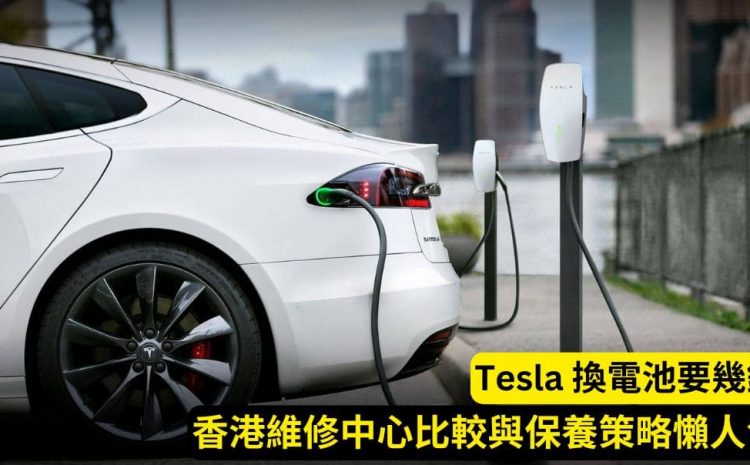
How Much Does a Tesla Battery Replacement Cost? Hong Kong Repair Centre Comparison and Maintenance Strategy Guide [2025 Latest]
One of the biggest worries for Tesla owners is having to replace the battery when it fails. Although a battery can last ten years or even longer, once it shows degradation, a fault, or a significant drop in range,the cost of replacing the battery can reach tens of thousands of dollars or more. So how much does Tesla battery replacement cost in Hong Kong at present? What is the difference between official and third-party repair centres? Which is the best value and which is the safest? This [ 2025 Latest Practical Guide] will provide a comprehensive breakdown of Tesla battery replacement costs, repair options and maintenance advice,to help you prepare thoroughly and avoid falling into traps!
Does a failed Tesla battery always have to be replaced? Can it be repaired?
When a Tesla suddenly loses range, will not charge, or even shows a “Battery Needs Service” alert, many owners’ first reaction is to worry:Do I need to replace the whole battery? Will it be very expensive?
In fact,Not all battery problems require replacing the entire battery pack. In some cases, repairs or replacement of only some modules are possible, depending on the type of fault, extent of damage, maintenance condition and technical feasibility.
Below, we break down common types of Tesla battery faults and analyse which situations require replacement and which can be repaired.
Common Battery Fault Types (Swelling, Voltage Drop, Cooling Abnormalities)
Although Tesla lithium batteries are rigorously designed, prolonged use, environmental factors or abnormalities in individual cells can all lead to the following problems:
| Fault Type | Symptoms | Possible Causes | Recommended Action |
| 🔋 Battery Swelling | Bulging at the underside of the vehicle, deformation of the battery compartment | Gas build-up inside the cells (usually due to overheating or ageing) | High risk; immediate inspection recommended |
| ⚡ Voltage Drop / Instability | Sudden drop in range, slower or unstable charging speed | BMS failure, cell ageing, failure of some battery strings | Can be repaired, or the module can be replaced |
| 🧊 Cooling System Fault Warning | Vehicle displays ‘Battery Cooling Fault’ and power limitation | Battery cooling pump or coolant leak | Can be repaired; battery replacement is not always necessary |
| 🔌 Unable to Charge / Charging Interrupted | No response after plugging in, or charging stops midway | Battery management system fault, corroded connectors, cell abnormality | Requires professional inspection; may involve module replacement |
✅ If you suspect there is an issue with your battery, we recommend WhatsApp our technician Wah Gor to book a free inspection and prevent the problem from worsening.
When is replacement needed vs when can it be repaired?
Not all battery issues require a full replacement. Below is a comparison of common scenarios:
| Issue category | Repairable? | Recommended action |
| Localised cell ageing / individual module damage | ✅ Repairable or module can be replaced | Third-party can handle, at a lower cost |
| Battery cooling system / BMS fault | ✅ Mostly repairable | Can be handled by the manufacturer or a skilled third party |
| Overall capacity falls below 70% (range drops significantly) | ❌ Recommend replacing the whole battery pack | Affects driving safety and practicality |
| Battery swelling / leakage / odour | ❌ High risk, replacement required | Recommend stopping driving immediately and sending it for inspection |
| History of battery fire or explosion | ❌ High safety risk | Not suitable for continued use; requires replacement and professional handling |
💡 Generally, if the problem only affects 1–2 modules,Consider repair; the cost may be only one-third of a full replacement.
Is it still under warranty? How to check Tesla warranty status?
Before considering repair or replacement, the first step is to confirm:Is your Tesla still within the battery warranty period?
Tesla’s official battery warranty periods are as follows (as of 2025):
| Model | Battery warranty period | Mileage limit |
| Model 3 / Y | 8 years or 80,000 km | Whichever comes first |
| Model S / X | 8 years or 100,000 km | Whichever comes first |
✅ How to check:
- Log in to the Tesla App → tap ‘Service’ → check the ‘Warranty Status’ page
- Or log in to your Tesla account on the official website → view vehicle details
- Or contact Tesla Customer Support directly (VIN required)
🔍 If still under warranty, Tesla will repair or replace the battery module free of charge(depending on the nature of the issue). But if it is out of warranty, we recommend comparing third-party repair options as well.
📞 If you’re not sure whether your car is out of warranty, feel free to WhatsApp our technician Wah Gor for enquiries and to book an inspection, so you can understand the situation clearly before deciding how to proceed.
How much does it cost to replace a Tesla battery? 2025 Latest Hong Kong price overview
When battery health declines, a fault occurs, or the battery cannot charge normally, the most practical question is:How much does battery replacement actually cost?
According to the latest market information for 2025, the cost of replacing a Tesla battery varies depending on the model, battery specifications, whether the repair is carried out by Tesla, and the vehicle’s condition. Below, we have compiled price references for official and third-party repairs, and analysed the key factors affecting cost to help you make the smartest decision.
Tesla official service centre quote reference (Model 3 / Y / S / X)
Tesla official repairs provide genuine battery replacement; pricing is transparent but usually higher, mainly covering:
- Brand-new battery module (usually replaced as a complete unit)
- Official technical support and a 4-year battery warranty
- Battery cooling system, BMS inspection and updates
| Model | Official battery replacement quote (HK$) | Suggested labour time | Notes |
| Model 3 (Standard version) | $95,000–$115,000 | Approx. 1–2 days | LFP battery price is slightly lower |
| Model Y (Long Range) | $105,000–$125,000 | Approximately 2 days | Battery modules are larger in newer models |
| Model S / X (older models) | $130,000–$160,000 | 2–3 days | Mainly 90Mainly kWh/100 kWh |
| Model S / X (Plaid) | $180,000+ | Subject to availability | Booking required at the official service centre |
📌 Although replacing the battery at the official service centre is expensive, it wins on safety and comprehensive warranty cover, making it a suitable choice for owners whose cars are still within the original warranty period or who place an extremely high priority on safety.
Average price comparison of third-party repair centres
In recent years, several experienced third-party Tesla specialist repair centres have emerged in Hong Kong, offering:
- The option to replace the whole pack or a single module
- Use of salvaged or refurbished battery modules (depending on requirements)
- Greater price flexibility, supporting owners of older cars or vehicles outside the warranty period
| Model | Third-party battery replacement quotes (HK$) | Module replacement (single) | Warranty period |
| Model 3 / Y | $45,000–$70,000 (whole pack) | Approximately $6,000–$12,000/module | 6–12 months (depending on the centre) |
| Model S / X | $60,000–$95,000 (full pack) | Approximately $8,000–$18,000/module | Up to 1 year warranty |
🔧 If the battery issue only affects some modules, a third-party option can save you at least 4 tenths of the cost.
📞 Quick tip: not sure whether to replace the whole battery or just a module? Feel free to WhatsApp book a free inspection with our technician Wah Gor, and he will show you on site what best suits your car.
Replacing the entire battery pack vs replacing modules (is module replacement feasible?)
A Tesla battery consists of multiple modules, usually 4–16 modules, varying,if even one of them develops a problem, overall performance will be affected.
✅ Feasible scenarios (suitable for module replacement):
- 1–2 module voltage abnormality (readable by BMS)
- Localised cooling abnormality; slight swelling has not spread
- No systemic degradation; other modules show normal health
⚠️ Cases where module replacement is not recommended:
- Uneven voltage across multiple modules
- Severe cell ageing (overall range falls below 70%)
- Leakage, swelling or damage to the cooling structure
💡 Third-party repair centres usually support module replacement, but a professional diagnosis is needed to determine whether repair is worthwhile.
Factors affecting the actual cost (battery capacity, vehicle age, extent of damage)
The cost of battery replacement does not depend on the model alone; the following factors can also significantly affect the quote:
| Factor | Explanation |
| The larger the battery capacity, the higher the cost | 75kWh,100kWh and Plaid versions use more materials, so the price naturally rises |
| Vehicle age and repair history | Older vehicles or those that have been repaired before may require additional work on connectors and the cooling system |
| Extent of damage | If the battery has leakage or signs of fire, more components must be dismantled |
| Whether it is still under warranty | If it is still within the original warranty period, the official service centre may replace it free of charge (warranty terms must be checked) |
| Whether to choose a refurbished battery or a new original battery | Refurbished batteries cost about 20 less–40%, but the warranty period is shorter |
📈 We recommend carrying out a battery health diagnosis first, then deciding on the treatment plan based on the actual condition.
📞 Reminder: Not sure about your vehicle’s condition? You are welcome to WhatsApp our technician Wah Gor to book a free inspection and find out when to replace it, how to replace it, and whether it is worth replacing.
Hong Kong Tesla repair centres compared | Official vs third-party
When you notice an abnormality with your Tesla battery, before deciding whether to repair or replace it, the first choice is:Should you go to the official service centre or find a third-party repair centre?
Both have their own advantages and limitations, depending on budget, vehicle condition, warranty period and personal preference. Below is an in-depth analysis with a clear comparison table to help you choose the option that best suits you.
Advantages and limitations of official repairs (warranty, parts, scheduling)
✅ Advantages:
- The official service centre uses brand-new Tesla-certified battery modules and components
- Provides Longest official warranty period (up to 4 years)
- The complete vehicle system and OTA update functionality are retained after repair
- Technicians are trained by Tesla officially, with rigorous procedures
⚠️ Limitations:
- Longer lead times(especially in summer or peak periods)
- Costs are generally higher, with no room for negotiation
- The official centre only offers full module replacement and does not carry out single-module repairs
- Additional diagnostic fees may apply once out of warranty
💡 Suitable for: owners still within the warranty period, seeking the highest safety, or planning to keep their vehicle long term.
Third-party repair advantages and risks (cost, flexibility, technical differences)
✅ Advantages:
- Significantly lower costs, with flexible options such as module replacement and refurbishment
- Choice of refurbished batteries and recycled modules,Saving up to around 40–60%
- Short waiting times,Same day or 1–within 2 days
- Experienced third-party technicians are familiar with Tesla battery structures
⚠️ Risks:
- Parts may not be original (depending on the repair centre)
- Shorter warranty period (typically 3–12 months)
- Skill levels vary, so choose reputable providers carefully
- May affect official warranty terms (especially when carried out during the warranty period)
💡 Suitable for: owners past the warranty period, on a limited budget, or needing a quick solution.
🚗 Official vs third-party repair comparison table
| Item | Official repair centre | Third-party repair centre |
| Price | High($90,000–$180,000+) | Medium to low($45,000–$95,000) |
| Module replacement available | ❌ Full pack replacement as standard | ✅ Module-level repair supported |
| Technical certification | Tesla-approved
technicians |
Varies by provider (please check) |
| Warranty period | Up to 4 years | Typically 3–12 months |
| Turnaround time | 2–4 days (by appointment) | 1–2 days (subject to parts availability) |
| Parts source | Genuine new OEM parts | OEM, refurbished and salvaged parts all available |
| Booking flexibility | Lower, requires scheduling | High, can be handled immediately |
How do you choose the right repair centre? (Technical credentials, warranty period, quote clarity)
You should not choose a repair centre on price alone; the following points matter more:
- Technical credentials and experience
– Have they worked on the same model before? Are they familiar with the battery module structure? - Clear and transparent quoting
– Does it cover labour? Coolant? BMS calibration? Is everything itemised? - Whether a warranty and proper invoice are provided
– We recommend choosing a provider that offers at least 6 months’ warranty and supplies repair records, which helps if you sell the car later - Whether a free initial inspection or quote is offered
– Many third-party centres charge an inspection fee, whereas Wah Gor offers free diagnostics for greater flexibility
✅ In short:
Higher budget and safety first? → Official service centre.
Limited budget and out of warranty, looking to save? → A trustworthy third-party repair centre.
📞 Tip: you can first WhatsApp Wah Gor to book an inspection, find out the actual condition, then decide where the most cost-effective repair is.
How can you avoid replacing the battery? Tesla battery care strategies revealed
A Tesla battery does not simply fail after a few years,However, if charging habits are poor and maintenance is neglected over time, degradation will accelerate and may even lead to premature failure. In fact, with correct usage, battery life can be extended by more than 30%.
Below are practical battery maintenance strategies for Hong Kong Tesla owners, helping you reduce unnecessary repair costs and avoid ‘premature battery replacement’ at the source.
How do everyday charging habits affect battery life?
There are two things lithium batteries fear most:Overcharging + over-discharging. Below are several common charging habits that can easily affect battery life:
| Habit | Impact | Recommended practice |
| Charging to 100% every time | Cells remain under high voltage for long periods, increasing thermal load | Unless driving long distances, set a daily limit of 80% |
| Charging only after it drops below 10% | Deep discharge accelerates structural wear | Recommended to charge once below 20% |
| Daily fast charging (Supercharger) | Battery temperature spikes, placing a heavy load on the cooling system | Use 1 per week–2 times is enough; use slow charging on ordinary days |
| Leaving it plugged in for long periods without interruption | May create a ‘battery stress cycle’ | Recommended to set scheduled charging or use the charge limit function |
📌 Tip: LFP batteries (some Model 3) can occasionally be charged to 100%, but long-term full charging is also not recommended.
How to monitor Battery Health? (What warning signs are there?)
Tesla does not provide a clear figure showing battery health (SoH), but owners can indirectly understand battery condition through the following methods:
✅ Common Battery Health monitoring methods:
- Compare actual usable range vs manufacturer’s stated range
For example, if it originally had 450 km, and now only 370 km remains, this represents a degradation of about 17% - Use Tesla App data / third-party tools (such as Tessie, Scan My Tesla)
Can read key data such as voltage imbalance, module temperature and charging efficiency - Observe whether the vehicle shows the following abnormal warning signs:
– Charging speed becomes slower, unable to charge to the preset limit
– Frequent ‘Battery needs service’ alerts
– Frequent automatic power reduction (Power Limited)
⚠️ If you notice the above, it is advisable to promptly WhatsApp Master Wah to book a free battery inspection, to avoid the problem worsening.
Practical tips to extend battery life (avoid deep discharge, reduce fast charging)
To effectively extend Tesla battery life, the following practices have been widely proven to help slow down degradation:
| Recommended practice | Reason |
| 🌡️ Reduce use of fast charging (Supercharger) | Lowers the frequency of high-temperature operation, reducing heat-related degradation |
| 🔋 Maintain the charge level between 20–80% | Reduces stress cycles on the cells, which is best for battery lifespan |
| 💤 During idle periods, maintain 50–70% charge level | Avoid deep discharge, which can cause permanent damage, especially when the car is left unused for long periods |
| 🧊 Avoid parking in direct sunlight or high-temperature environments | High temperatures accelerate electrolyte evaporation and worsen degradation |
| 🔌 Use the scheduling function to charge slowly overnight | Reduces peak grid load and avoids overcharging |
✅ Adopting the three ‘don’ts’ — do not overcharge, do not over-discharge and do not overheat — can already reduce most cases of premature battery ageing.
The importance of regular checks and software updates
Tesla continuously optimises the battery management system (BMS) through OTA (Over-the-Air) updates, including:
- Improving cell balancing strategy
- Fine-tuning charging voltage and cooling logic
- Adding next-generation battery health monitoring features
Recommendations:
- Keep a Wi-Fi connection and check update status regularly
- Carry out a battery health check every six months(Recommended to be carried out by a professional technician)
- If abnormal charging behaviour occurs, investigate immediately whether it is related to software or hardware
📞 Not sure if your car has any potential battery issues? You are welcome to WhatsApp Wah Gor to book a free battery health check — early detection means early action.
📌 Summary tip: Extending Tesla battery life is not about luck — it comes down to how you use and maintain your car day to day.
Replace or not? How do you decide whether a new battery is worth the investment?
When your Tesla has been used for a few years, its range has fallen to just 70%, and the system even starts showing ‘Battery repair required’, you may wonder:Is replacing the battery really worth it? Or should you just replace the car?
The following analysis will help you considercost, benefits, vehicle age and future years of usealong with other perspectives, so you can make a more rational choice.
Old car battery replacement vs buying a new car: cost comparison
| Option | Cost (approximate) | Advantages | Potential limitations |
| New battery (third-party) | $45,000–$80,000 | Lower cost, can extend life 4–6 years | Other body components may deteriorate |
| New battery (original manufacturer) | $90,000–$150,000 | Manufacturer warranty, optimal system compatibility | Cost close to buying a new car, waiting period required |
| Buy a new car (new Model 3/Y) | $320,000+ | Hardware upgrade, software update, overall new feel | Higher expense, need to handle selling the old car |
💡 Recommendation:Vehicle age 5–7 years or less, if the vehicle is in good condition, battery replacement is usually more cost-effective than buying a new car. If the body has deteriorated severely, consider upgrading directly.
Range improvement and benefits after battery replacement
After Tesla battery degradation, range decreases year by year. Assuming the original rated 500 km, dropping to 350 km (approximately 70% SoH), replacing the battery can deliver the following benefits:
- Range recovers to 90–100% of the original level
- Improved charging efficiency and shorter fast-charging times
- Increased vehicle resale value
- Fewer battery management system errors or power-derating issues
| Before battery replacement | After battery replacement | Improvement |
| 350 km range | 480–500 km range | +30–40% |
| Fast charging takes 50 minutes | Fast charging 30–35 minutes | Approx. -40% time |
| Frequent power derating | Restores full output | Smoother driving experience |
✅ If you plan to keep the car for several more years, replacing the battery can greatly improve practicality and driving confidence.
Is a battery upgrade feasible? (e.g. switching to a high-density battery)
Some third-party repair centres, particularly for older Model S / Model X vehicles, offerupgrade packages to high-density battery modules, including:
- Upgrade from 75kWh to 90kWh / 100kWh
- Uses refurbished but high-performance modules
- Increased range + support for faster fast-charging rates
| Vehicle model | Original battery | Upgraded version | Range increase |
| Model S 2015 | 70kWh | 90kWh | + approx. 100 km |
| Model X 2016 | 75kWh | 100kWh | + approx. 120–150 km |
Notes:
- Not all models can be upgraded; this depends on BMS compatibility.
- After the upgrade, the vehicle may not be officially approved by Tesla, but this has little impact in practical use.
- The cost is higher than a typical replacement (around $80,000–$120,000)
⚠️ We recommend that you first WhatsApp technician Wah Gor to book an inspection and confirm whether the vehicle is suitable for the upgrade option.
Real customer case studies
📍 Case 1: Model 3 SR+ (2019) owner Mr A
“I’ve used it for 5 years, and the battery has dropped to only 280km. The official quote was over $100,000, so in the end I asked Wah Gor to use refurbished modules, and it was sorted for $48,000; after the replacement, the range returned to 420km, basically no different from a new car.”
📍 Case 2: Model S (2016) owner Ms B
“I can’t bear to let go of the car, but I don’t want to have to find a charging point every time I go out, so I upgraded to 90kWh refurbished battery, with range from 310km increased to 450km, so you don’t have to worry as much when heading out.’
📍 Case 3: Model Y LR (2021) owner, Mr C
‘The official service centre said I’d have to wait two months for a battery module, so I ended up choosing a third party. It was sorted in two days, came with a six-month warranty, and they even checked the cooling system for me. Worth it.’
📞 Want to know whether replacing your car’s battery is worthwhile? Or whether there are upgrade options? You’re welcome to WhatsApp book a free vehicle inspection and quote with Master Wah, with no-pressure enquiries!
🔚 Summary of recommendations:
- If you plan to keep your car for a few more years, replacing the battery is a practical and environmentally friendly choice
- If the car’s condition is poor, with ageing in multiple areas, or you’re considering upgrading to a new car, replacing the car may be more sensible
Conclusion: Replacing the battery isn’t necessarily a bad thing — knowing how to choose is what matters most
For many Tesla owners, ‘battery replacement’ sounds like a heavy expense. But in fact, as long as you have the right information and plan ahead, replacing the battery isn’t necessarily a bad thing, nor does it have to be a huge expense.
Plan ahead, understand your options, save money and time
As the Tesla market matures, Hong Kong has official service centres, and more and more technically mature, trustworthy third-party repairers are emerging. Whether you want to save money, seek an official guarantee, or upgrade your range, there are different options to suit you.
Understanding the following points early can help you:
- avoid being misled by overpriced quotes
- identify which faults can be repaired without replacing the entire battery
- compare official vs third-party quotes and warranty periods
- assess the real benefits of replacing the car vs replacing the battery
💡 Planning ahead = saving money + saving time + greater peace of mind.
We recommend booking an inspection before deciding; doing thorough research is most important
Many owners panic as soon as they see the ‘Battery Needs Service’ alert, and may even consider replacing the car outright. But in reality:
- sometimes it’s merely a cooling system issue or module voltage imbalance — the battery doesn’t necessarily need replacing
- after a professional inspection, you may only need to replace 1–2 modules to solve the problem
- in some cases, it can even be resolved with an OTA update or reset
So we recommend:Don’t rush to a decision — get an inspection first, then compare, and that puts you in the best position.
📞 If you suspect battery degradation, a rapid drop in range, or abnormal charging, feel free to WhatsApp our technician Wah Gor to book a free battery health check:
✅ Free initial inspection, no quotation fee
✅ Supports all versions of Model 3 / Y / S / X
✅ We’ll tell you whether it’s worth replacing, and when it’s still not too late to do so
👉 Click here to book via WhatsAppWahGor
🎯 Conclusion:
- A faulty Tesla battery doesn’t necessarily mean replacing the entire pack
- Having options is your biggest asset: both OEM and third-party options have their advantages
- Comparing thoroughly before deciding is always the smartest move
🧭 Recommended further reading
-
How to best maintain an electric vehicle in Hong Kong's climate? 5 practical tips you need to know
-
A complete guide to Tesla battery life and replacement timing in Hong Kong|When is the best time to replace? How to extend battery life?
-
Tesla maintenance costs revealed: an overview of repair expenses by model