
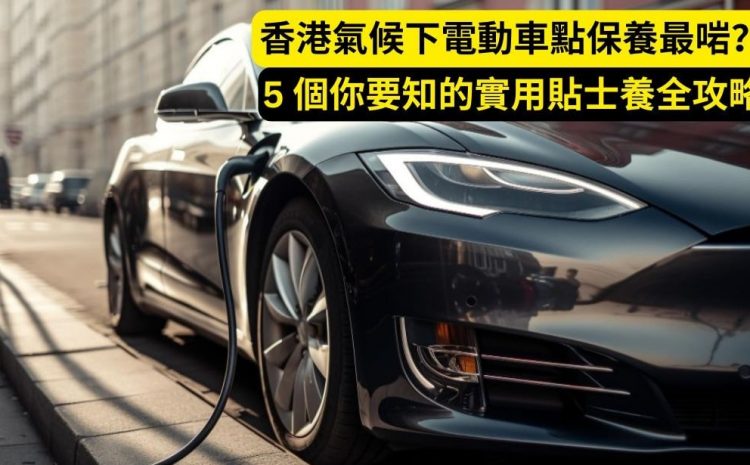
How Should You Best Maintain an EV in Hong Kong’s Climate? 5 Practical Tips You Need to Know
Hong Kong has a typical subtropical climate, hot and humid with frequent rain throughout the year, which poses additional challenges for EV batteries, electronic control systems, bodywork metal and other components.To extend an EV’s lifespan and reduce the risk of faults, the right localised maintenance strategy is essential.
This article will examine in depth the 5 key maintenance practices that EV owners must pay attention to in Hong Kong’s climate, from battery management and charging habits to parking environments and the details of moisture and rust prevention,to help you reduce repair costs, improve resale value and enhance driving safety.
Be aware of the risk of battery thermal degradation: what is the safest way to use your EV in high summer temperatures?
In a place like Hong Kong,with its hot and humid climate,driving an EV means one of the biggest risks the battery faces is ‘thermal degradation’. In particular, from June toSeptember, when temperatures are consistently above32°C, if owners do not take appropriate protective measures, battery ageing will accelerate significantly and may even affect range and safety.
Why do Hong Kong summers particularly accelerate battery ageing?
Hong Kong summers are hot and humid, andlithium batteries are particularly sensitive to high temperatures.When a battery is exposed to temperatures above 35°C for prolonged periods, internal chemical reactions speed up, leading to:
- Faster electrolyte decomposition
- Increased internal resistance and lower discharge efficiency
- Accelerated ageing of the cell structure and rapid capacity decline
According to multiple studies,when a battery operates at 40°C, its lifespan can be shortened compared with25°C by as much as30%. However, many open-air or enclosed car parks in Hong Kong can reach temperatures above 45°C, which is far from ideal for batteries.
⚠️ Keyword note: battery thermal degradation, lithium battery ageing, effects of high temperatures on battery lifespan
How should you set the charging limit and cooling time?
To manage the strain Hong Kong’s high temperatures place on the battery,the right charging settings and cooling strategy are essential.
✅ Recommended charging limit:
- Daily use (city commuting): set the charging limit to 80–85%
- The night before long-distance travel: Can be temporarily charged to 100%, but not recommended to maintain long term
✅ Cooling and scheduling recommendations:
- Use the native app for Tesla, BYD, Hyundai and similar models to set scheduled charging
- Recommended at night 10:00 until morning 6:00 for slow charging, avoiding daytime heat and grid peak hours
- Enable the “Pre-cooling” or “Battery Preconditioning” function to ensure the battery is at an ideal temperature before charging
📌 A small reminder:Avoid fast charging while driving in hot weather (such as continuous use of Supercharger), the battery temperature may soar above 55°C.
Recommendations to avoid parking in direct sunlight for long periods
Besides charging management, the parking environment is equally crucial to battery health. Especially in hot weather, prolonged direct sunlight can push the cabin temperature above 60°C, causing damage to the battery, electronic modules and even the interior.
✅ Parking recommendations are as follows:
| Scenario | Recommended action |
| Open-air parking space | Use a windscreen sunshade, a sun canopy, or choose a shaded parking space (such as under a tree or in a building’s shadow) |
| Shopping mall or office car park | Give priority to basement levels (e.g. B2/B3), avoiding top-floor outdoor spaces |
| Long-term parking (2 days or more) | Keep the charge level at 50–70%, avoiding leaving the battery idle at a high charge level in a high-temperature environment |
| When sunlight cannot be avoided | You can remotely switch on air conditioning pre-cooling, or use the “Cabin Overheat Protection” function (as provided by Tesla) |
✅ Besides protecting the battery, it also helps extend the lifespan of the dashboard, cooling system, rubber parts and other in-car components, reducing repair expenditure.
📞 If you notice your range dropping quickly, charging becoming slower, or frequent battery temperature warnings, feel free to WhatsApp our technician Wah Gor to book a free battery health check.
Humid environments can easily damage the electronic control system — how can you waterproof and moisture-proof it?
Hong Kong’s average annual humidity exceeds 75%, and during the rainy season(5–September), heavy rain, flooding and typhoons are more frequent, posing a potential threat to the electronic control units (ECUs), battery management systems (BMS) and wiring harness connectors inside electric vehicles.
Even if an electric vehicle has a certain level of water-resistant design, prolonged exposure to high humidity or standing water can still lead to system faults, short circuits and even affect driving safety. Therefore, carrying out regular water- and moisture-proof inspections and improving parking and driving habits are maintenance essentials that every owner should not overlook.
Potential risks of underbody water accumulation and short circuits in electronic components
Although most electric vehicles’ battery packs and high-voltage systems are designed with an IP67 water-resistance rating, prolonged immersion, underbody water accumulation or mud and debris blocking drainage holes can still allow moisture to seep into electronic control areas, bringing the following risks:
- Short circuits in underbody electronic control modules (such as the MCU and battery cooling pump)
- Oxidation and corrosion of high-voltage cable and battery module contacts
- Sudden stalling or power limitation messages while driving
- High repair costs outside the warranty period, or even being unable to repair the vehicle
⚠️ Special reminder: if you have driven through flooded roads (such as low-lying areas or during heavy rain),even if the vehicle shows no obvious abnormalities, it is advisable to arrange an inspection of the chassis and connectors.
Advice on choosing parking and driving environments
Choosing the right parking and driving environments can significantly reduce the impact of humidity on electric vehicles. Here are some practical recommendations:
✅ Parking recommendations:
| Situation | Best practice |
| Parking outdoors for long periods | Prioritise covered spaces to avoid rainwater dripping for long periods onto the roof and tailgate connection points |
| Basement car park | Avoid the lowest levels (such as B3,B4) and check that the drainage system is clear |
| Humid areas | Consider regularly using desiccants or switching on the air conditioning’s dehumidify mode (such as Tesla Cabin Dry Mode) |
✅ Driving environment precautions:
- Avoid driving into clearly flooded roads, especially during red/black rainstorm warnings
- After sudden rain, slow down when driving through low-lying areas (such as tunnel exits and sloped roads at shopping centres)
- Watch for abnormal noises and unusual vibrations when water splashes onto the underbody
📌 Friendly reminder: if you accidentally drive into deep water, even if the vehicle can still be driven, you should check the condition of the waterproof seals on the high-voltage module as soon as possible.
Regularly check the waterproof sealant on connectors and wiring harnesses
An EV’s electronic control system connects its various modules through a large number of wiring harnesses and connectors,and these connection points are the weak link in water protection, especially after exposure to high humidity or flooding, they are most susceptible to oxidation, loosening or short circuits.
✅ Recommended every 6–12 months, carry out the following checks:
- Whether the high-voltage cables and connectors under the vehicle are loose or show water marks
- Whether the sealant layer between the battery modules and the main chassis is intact
- Whether the harness connectors show whitening, rust spots or ageing insulation
- Use an EV-specific diagnostic tool to test for insulation faults or voltage imbalance
✅ This should be carried out by an experienced EV technician (such as a Tesla specialist or a certified third-party technician),to avoid affecting the warranty or safety through DIY disassembly.
📞 Would you like to know whether your vehicle’s underbody water protection is in good condition? WhatsApp professional technician Wah Gor’s team to book a free underbody inspection and electronic control module moisture test.
Correct charging habits extend battery life: fast charging every day isn’t the answer
For an EV, charging is not just about topping up range; it also affects battery health and long-term performance.Incorrect charging methods can accelerate lithium battery ageing and even shorten overall service life by more than 20%. In Hong Kong’s urban environment, many owners are used to using fast charging or supercharging at high frequency, but this is not necessarily ideal.
Below, we break down how to balance fast and slow charging in daily use, as well as the golden range for charge management, to help you use your vehicle with greater peace of mind and durability.
Balancing slow charging vs fast charging for daily use
✅ Fast charging (e.g. Tesla Supercharger)
- Pros:Quick top-ups and time savings, suitable for long journeys or emergencies
- Cons:High current and high temperatures accelerate battery ageing, and frequent use affects battery life
✅ Slow charging (AC home charging / car park slow charging)
- Pros:Gentle charging with low stress on the battery, suitable for daily commuting
- Cons: longer charging times, requiring parking time to match
🔍 Recommendation:80–90% For daily use, slow charging should be the main method, with fast charging only as a supplement. If you drive only 40–60 km per day, slow charging is more than sufficient.
📌 Keyword hint: EV fast charging damages the battery, slow charging is better for the battery, fast charging degradation rate
Recommended charge level rangeUsage habits (20%–80%)
The ideal operating voltage range for a lithium battery usually falls at a charge level of between 20% and 80%. Operating within this range over the long term can effectively reduce the following issues:
- Lower the rate at which battery internal resistance rises
- Reduce the risk of cell overheating or overvoltage
- Extend overall battery cycle life (Cycle Life)
✅ Recommended settings:
| Usage scenario | Recommended charge range | Description |
| Daily commute | 20%–80% | Optimal balanced operating range |
| Long-term parking | 40%–60% | Avoid leaving the battery empty or fully charged when idle |
| Long-distance travel | Can charge to 90–100% | But it should be used as soon as possible, avoiding being left idle at a high charge level |
📌 Tesla, BYD, Hyundai and other models all allow you to set a charging limit,It is recommended to set the long-term default below 80%.
Avoiding the long-term effects of deep discharge and overcharging
❌ Deep discharge (<10%)
- Battery voltage being too low may cause the BMS to reduce power
- When charge is restored, the cells take longer to rebalance
- Doing so too frequently can cause permanent capacity loss
❌ Overcharging to full (>90% long-term)
- Internal pressure in the cells increases under high voltage
- Electrolyte decomposition accelerates, leading to thermal degradation
- Prone to problems such as ‘battery swelling’ and ‘reduced energy storage efficiency’
⚠️ A quick note:Just because it charges fully and lasts long doesn’t mean it’s good. Battery care is more important than range; long-term health is key.
📞 Want to know if your car’s charging habits are harming the battery? Feel free to WhatsApp Master Wah Gor’s team to book a free battery health analysis and usage advice.
Body metal and chassis protection: What’s the most effective way to prevent rust in coastal areas?
Many districts in Hong Kong are coastal, with high salt concentration in the air, plus high humidity year-round,posing a long-term corrosion risk to electric vehicle chassis, suspension systems, frames, and battery module casings..
This is especially true for car owners driving in near-sea areas such as Southern District, Tseung Kwan O, Tsuen Wan, Sai Kung, and Tuen Mun,Over years of exposure to salt spray and moisture, without regular rust-proofing, it is highly susceptible to chassis rust, component embrittlement, and can even affect driving safety and range efficiency.
Impact of salt and high humidity on chassis components
Salt and moisture accelerate the oxidation of metal parts. For electric vehicles, potential damage includes:
- Chassis steel corrosion: Affects structural strength and increases the risk of fracture
- Corrosion of high-voltage cable fasteners: Leading to loose wiring harnesses or short circuits
- Battery module casing damage: Reduces water resistance, increasing the risk of moisture ingress
- Rusting and seizing of screws, suspension arms, and bearings: Affects suspension and driving stability
⚠️ Special note: Some car owners think electric vehicles have ‘no engine oil stains’ and therefore ignore the chassis condition. In fact, EV chassis need more rust protection because more cables and modules are exposed underneath the vehicle.
Rust-proof coating, chassis guards, and regular car wash strategy
✅ Recommended rust prevention measures:
| Item | Recommended frequency | Notes |
| Chassis rust-proof coating | Every 12–18 months | Recommended to use rust inhibitors specifically for high-salt environments (such as petroleum-based or resin-based) |
| Install chassis guard | One-time | Effectively blocks splashes and debris from directly impacting the underbody electronic control modules |
| High-pressure washing of the chassis | After every rain / after driving near the sea | Wash away salt and mud immediately to prevent accumulation and oxidation |
✅ Car wash recommendations:
- After the rainy season, rinse the underside of the vehicle immediately, especially the inner wheel arches and suspension areas.
- Avoid acidic car wash products, as they will accelerate corrosion of chrome-plated parts and the exhaust pipe.
- Consider periodic underbody coating or nano anti-rust coating to strengthen protection.
✅ Quick tip:If you frequently drive along coastal roads or live in areas exposed to salt-laden winds (such as Stanley or Lei Yue Mun), it is advisable to check the underbody for rust every six months.
This is especially relevant for car owners in Southern District, Tseung Kwan O and Tsuen Wan.
Based on on-site observations, car owners in the following areas should pay particular attention to underbody anti-rust protection:
- Southern District (Stanley, Repulse Bay, Cyberport): High salt spray concentration, slow air circulation and a high corrosion rate.
- Tseung Kwan O (around Ocean Wings and The Parkside): A new town by the coast, with poor road drainage and prone to water pooling.
- Tsuen Wan (around Ocean Pride and Lido Garden): Strong sea breezes in the industrial area, with vehicles frequently exposed to highly saline, humid air.
- Sai Kung, Tuen Mun, Ma On Shan: Close to beaches and piers, with frequent weekend driving on wet, sandy roads.
📌 We recommend that car owners in the above areas,carry out an annual underbody anti-rust refurbishment and arrange a high-pressure underbody wash. If you park outdoors or near the sea, you should increase the frequency.
📞 Want to know whether your vehicle’s underbody needs anti-rust treatment? Feel free to WhatsApp our technician Wah Gor’s team,to book a free underbody rust inspection and quotation advice.
Regular system diagnostics and OTA updates should not be overlooked
One of the biggest differences between electric vehicles and traditional petrol vehicles is their heavy reliance on software control and data algorithms. Whether it is battery management (Battery Management System, BMS), electric motor output, the cooling system or even regenerative braking design, everything is precisely calculated by the onboard computer.
Therefore,Regular system diagnostics and updating the original manufacturer’s OTA (Over-the-Air) firmware are crucial for maintaining performance, extending battery life and ensuring driving safety..
Why do OTA updates help optimise battery management and cooling?
OTA updates are not merely interface revisions or new features;they deliver clear technical improvements in battery health and cooling efficiency.. Brands such as Tesla, BYD and Hyundai in particular often optimise the following key systems with each update:
| System module | Update benefits |
| Battery Management System (BMS) | Optimise the charging curve, balance cell voltages, and improve SOC (State of Charge) accuracy. |
| Thermal management system | Improve battery cooling/preheating logic to prevent overheating and thermal degradation. |
| Regenerative braking system | Improve energy recuperation efficiency while reducing strain on the battery. |
| Vehicle dynamics control | Enhance power output stability and extend component life. |
✅ Tip: Tesla previously adjusted the battery charging current distribution logic for Model 3/Y in an OTA update,successfully reducing 10–15% battery temperature rise.
How to use third-party diagnostic tools vs the manufacturer app
If you want to understand your own EV’s battery health, there are two common ways:
✅ Manufacturer app (such as Tesla App, BYD DiLink, Hyundai Bluelink):
- Pros: intuitive interface, high security, and support for manufacturer features (such as OTA, pre-cooling, scheduled charging)
- Limitations: limited data visibility (professional metrics such as battery SOH and voltage imbalance are not shown)
✅ Third-party diagnostic tools (such as Scan My Tesla, EVnotify, Car Scanner):
- Pros: can read detailed voltage, temperature, SOH (State of Health), charge/discharge records, etc.
- Limitations: requires additional hardware (such as an OBD adapter), demands more technical knowledge, and is not supported on some models
📌 For owners with a technical background or who are concerned about the rate of battery ageing, regular in-depth checks with third-party tools are recommended; general users can simply rely on the manufacturer app alongside regular inspections.
It is recommended to have the battery and electronic control system inspected every six months.
To ensure your car stays in optimal health, it is recommended that you:
✅ Carry out the following checks every 6 months:
- Battery health (SOH): Compare the actual capacity with the figure quoted for a new car
- Cell voltage balance: excessive differences may indicate uneven ageing or abnormal cooling
- Cooling system operating status: such as whether the fan and pump start normally
- High-voltage system insulation and fault warning records
- Whether the latest OTA firmware update is installed
✅ Which situations warrant an earlier check?
- Sudden drop in range
- Slower charging speed
- Abnormal battery temperature or power limitation displayed in the vehicle
- Has been driven through flooding, or in extreme heat/cold conditions
🛠️ Professional advice: even if there are no obvious abnormalities,regular diagnostics can also serve as evidence for value retention, which is useful for future resale or as proof of maintenance.