
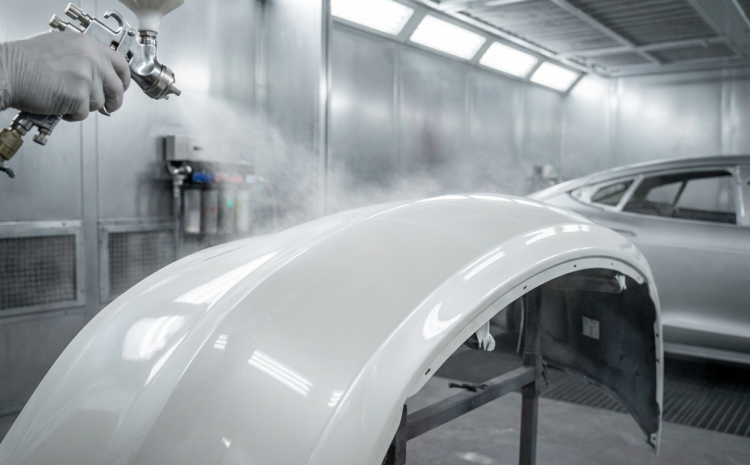
Tesla Respray & Body Repair Quote Guide 2026 | Aluminium Alloy Body Repair
Tesla Respray/Body Repair Quotation Guide 2026 | Is an Aluminium Alloy Body Difficult? Choose the Wrong Garage and You Could Get Patchy Colour Mismatch
Tesla’s advanced design and elegant lines have attracted many car owners. However, no matter how careful you are, the bodywork can still end up with scratches, dents or even need respray repairs. In particular, Tesla’s aluminium alloy bodywork is more exacting to handle than traditional steel; one slip and colour mismatch can occur, affecting your car’s overall appearance. In In 2026, with the EV repair market becoming increasingly complex, how to find a reliable garage, obtain a reasonable Tesla repair quote and still ensure repair quality has become a topic of concern for many car owners. In this article, we will take an in-depth look at Tesla respray and body repair quotations, especially the challenges of repairing aluminium alloy bodywork, and how to avoid the colour mismatch problems caused by choosing the wrong garage, giving you the most professional guide for 2026.
Whether you are a new car owner or an experienced Tesla user, when faced with body damage, questions always arise: How can you obtain a clear, reasonable repair quote? What exactly makes an aluminium alloy body special? What should you look out for when choosing a garage? We will answer these one by one, helping you to handle the challenges of Tesla body repair with ease.
Understanding Tesla body structure and repair fundamentals
Tesla’s body design not only pursues streamlined styling but also takes a distinctive approach to material selection. Many Tesla models use aluminium alloy bodies. Although this material is lightweight and strong, it also presents considerable challenges for repairs. To understand Tesla repair quotes, you must first understand these fundamentals.
Tesla Body Materials: The Advantages and Challenges of Aluminium Alloy
Traditional cars mostly use steel, but Tesla widely applies aluminium alloy across different models to improve energy efficiency and handling. Compared with steel, aluminium alloy is lighter, which helps to reduce vehicle weight, thereby improving range and acceleration performance. At the same time, aluminium alloy also has relatively better corrosion resistance. However, the hardness and ductility of aluminium alloy andSteel differs, which means that when carrying out body repairs, welding or even painting, more specialist skills and dedicated equipment are required. For example, welding temperature control for aluminium alloy needs to be more precise, otherwise the material can easily become distorted; and the sanding and primer treatment before painting also need to be carried out according to the characteristics of aluminium alloy, otherwise it can easily lead topeeling or colour mismatch issues.
Key point: Repairing an aluminium alloy body must never be treated in the same way as repairing a steel body; it requires specialist skills and experience.
Common Types of Tesla Body Damage
Tesla owners may encounter various types of body damage, with common examples including:
- Scratches: Scratches ranging from minor marks on the surface paint layer to deep scores that reach the metal layer.
- Dents: Dents in the body panels caused by collisions or accidents while parking.
- Collision Damage: More serious structural damage, potentially involving the chassis, body panels, lighting assemblies, etc.
- Paint Chipping or Fading: Prolonged exposure to sunlight and rain, or improper cleaning methods, can cause problems with the paint layer.
- Scuffs and Abrasions: In car parks, narrow alleys and similar locations, abrasion to the edges or corners of the body can easily occur.
Different types of damage vary greatly in repair difficulty, time required and cost. For example, minor scratches may only need localised paintwork, while serious collisions may require replacement of body panels or even structural repairs.
Why Is Tesla Body Repair More Important in 2026?
As the Tesla fleet continues to grow, demand for professional EV repair services continues to rise. In 2026, several factors make Tesla body repair even more critical:
- Second-hand Car Market Value: The condition of the body directly affects the second-hand value of a Tesla. A body that is in pristine condition with a glossy paint finish will undoubtedly make the vehicle more attractive.
- Technical Complexity: Tesla’s body design is closely integrated with its electronic systems; repairs are not only about dealing with physical damage, but sometimes also need to consider the impact on sensors, cameras and other components.
- Environmental Protection and Sustainability: A growing number of owners are concerned about how environmentally friendly repairs are. Choosing a workshop that can carry out precise repairs and reduce waste is in line with sustainable development principles.
- Manufacturer warranty period: Although many types of damage are not covered by the manufacturer warranty, choosing professional and reliable repair services can help you avoid additional problems caused by improper repairs, which could affect future manufacturer warranty coverage.
Further reading: Learn more about HK Tesla Repair’s services, ensuring your Tesla receives professional care.
Tesla Respray and Body Repair Quotations: Influencing Factors and Transparency
For many owners, the biggest concern is the repair quotation. A Tesla body repair quotation is not a fixed figure; it is influenced by many different factors. Understanding these factors will help you judge whether a quotation is reasonable and avoid being overcharged.
Main factors affecting Tesla repair quotations
A clear, accurate Tesla repair quotation will usually take the following key points into account:
- Extent and scope of damage: This is the most direct influencing factor. Minor scratches may require only localised respraying, which costs less; extensive dents, damage in multiple areas, or even the need to replace body panels will naturally increase the cost substantially.
- Repair techniques: Aluminium alloy bodywork requires more meticulous treatment. For example, when repairing dents, techniques such as ‘spot welding’ or ‘pulling’ may be used; before painting, multiple layers of primer, intermediate coat and topcoat are required to ensure the colour and gloss match the factory finish.
- Parts replacement costs: If the damage is severe enough to require replacement body panels (such as doors, wings, bonnet, etc.), the price of parts will become an important component of the quotation. Original factory parts are usually more expensive.
- Model and year: Different Tesla models (such as Model S, Model 3, Model X, Model Y) may have slightly different body structures and component designs, affecting the complexity and cost of repairs.
- Paint and materials: Using paint with the original factory formula, or high-quality repair materials, costs relatively more, but the results are also more assured.
- The workshop’s level of expertise and equipment: Workshops specialising in Tesla repairs are usually equipped with dedicated diagnostic tools, aluminium welding equipment, precise colour-matching systems and more; the investment in this equipment will also be reflected in the service price.
Professional tip: When requesting a quote, it is best to ask for a detailed breakdown of the items, such as: parts costs, labour costs, painting costs and consumables costs, so that you can compare and understand them.
How can you obtain a transparent, accurate Tesla repair quote?
In 2026, transparency in repair quotes is a basic expectation. Here are several key steps:
- Find a workshop that specialises in Tesla repairs: They have a better understanding of Tesla’s structure and material properties, and their quotes will be closer to the actual situation. For example, HK Tesla Repair specialises in repairs for various Tesla models, can provide instant quotes, and saves you the hassle of inspection fees.
- Compare multiple options, but don’t look at price alone: Ask at least 2-3 workshops for quotes, but don’t decide solely because the price is low. Consider the workshop’s reputation, the technicians’ experience and the warranty period offered.
- Provide detailed damage information: If possible, describe the damage in as much detail as you can or provide photos/videos, so the workshop can make a preliminary assessment.
- Ask for a written quote: Make sure the quote includes all repair items, estimated labour hours, parts details and the final total price.
- Ask about additional charges: Find out whether there are any potential additional charges, for example: if more serious problems are found, will a new quote be required?
Quote: “A workshop with a good reputation will proactively provide a clear repair quote and explain the reason for each charge.”
The importance of instant quotes
For busy car owners, time is money. Being able to obtain a repair quote instantly can save a great deal of time and effort. This is especially true for high-tech cars like Tesla, where many problems require professional diagnosis; if a workshop can provide an accurate quote within a short time, such a service is particularly valuable. HK Tesla Repair offers a no-inspection-fee, instant-quote service, which precisely addresses this pain point, allowing owners to quickly understand the repair options and budget.
Difficulties and solutions in aluminium alloy body repairs
The aluminium alloy bodywork commonly used by Tesla, while it has its advantages, is indeed more challenging to repair than traditional steel. Choose the wrong workshop, and you can easily end up with patchy colour differences, or an unsatisfactory result after repair.
Why is an aluminium alloy body so difficult to deal with?
The properties of aluminium alloy mean that repairing it requires special skills and equipment:
- Welding is highly challenging: Aluminium alloy has a lower melting point than steel and conducts heat readily. During welding, even a slight lapse in temperature control can easily cause deformation or burn-through. Dedicated aluminium alloy welding machines and precise welding techniques are required.
- Panel beating is highly demanding: Aluminium alloy’s ductility and springback differ from those of steel. When repairing dents, specific tools and techniques are required to restore the original shape accurately; otherwise, repair marks are easily left behind or the vehicle body structure may be affected.
- Pre-painting preparation is key: The surface of aluminium alloy oxidises easily and has special requirements for paint adhesion. Before painting, thorough cleaning, sanding and etching primer treatment must be carried out to ensure the paint adheres firmly and to prevent it from peeling or blistering later.
- Prone to colour mismatch: Aluminium alloy’s metallic finish and reflectivity place extremely high demands on paint colour matching. Even a slight colour difference is very noticeable under light and affects appearance.
Case example: A car owner had a Tesla aluminium alloy door repaired at a non-specialist garage. The newly painted surface showed an obvious colour difference from the original factory paint, and the edge finishing was not refined enough, greatly affecting the appearance.
How can you ensure the quality of aluminium alloy body repairs?
To overcome the difficulties of aluminium alloy body repair, car owners need to be discerning and choose truly professional services:
- Choose a specialist Tesla repair centre: Like HK Tesla Repair , teams that specialise in Tesla repairs have extensive experience in aluminium alloy bodywork and dedicated equipment.
- Check the workshop’s equipment: Ask whether the workshop is equipped with a dedicated aluminium alloy welding machine, a precise colour-matching system (such as a spectrophotometer for colour measurement), and professional panel repair tools.
- Learn about the paint brand and application process: Professional workshops choose high-quality automotive paint brands and use a multi-layer spraying process to ensure colour, gloss and durability.
- Prioritise localised repair: If the damage is not too severe, choose localised repair wherever possible to reduce the risk of colour mismatch and save costs.
- Check previous cases and reviews: Look at the workshop’s website, past repair cases on social media, and other customers’ reviews to gauge their technical standards and customer satisfaction.
Suggested external links: To learn more about the properties of automotive metal materials, you can refer to MatWeb – Material Property Data the metal materials database provided.
How can you avoid the nightmare of patchy colour mismatches?
Patchy colour mismatches are one of the most troublesome issues in aluminium alloy body repairs. To avoid this, the key lies in the word precision:
- Precise colour matching: Professional workshops use advanced colour meters to precisely measure the colour data of the factory paint, then mix the paint according to that data, striving for a match of 100%.
- Precise spraying technique: When spraying, it is necessary to control the spray gun’s distance, angle and speed as well as the amount of paint applied, ensuring the paint surface is even and smooth and avoiding orange peel or runs.
- Precise repair area: Even for a localised repair, the edge transition must be handled carefully so that it blends naturally, avoiding a visible repair line.
- Environmental control: A professional spray booth can provide a dust-free, temperature- and humidity-controlled environment, preventing dust and impurities from affecting the paint finish while ensuring the paint dries under optimal conditions.
A firsthand experience: One Tesla owner shared that he had once had a scratched wing mirror repaired at a small repair shop, and the newly sprayed paint was noticeably yellower than the rest of the body. Even when he asked them to put it right, the result was unsatisfactory, and in the end he had to take it to a dedicated Tesla repair centre to have it redone.
2026 Tesla Body Repair Trends and Best Practices
The car repair industry, particularly EV repair, is constantly evolving. In 2026, there are new trends and best practices worth Tesla owners’ attention, so they can enjoy a better repair experience.
Trend one: Data-driven diagnostics and repair
Tesla vehicles themselves already carry a large number of sensors and data logging systems. In the future, repairs will rely even more on this data for diagnostics. Professional workshops will use Tesla’s diagnostic software to read the vehicle’s fault codes and operating data, allowing them to identify problems more precisely and provide targeted repair solutions. This can reduce unnecessarydismantling and inspections, improving repair efficiency.
Trend Two: Environmentally Friendly and Sustainable Repairs
As environmental awareness grows, more and more car owners and workshops are paying attention to the environmental credentials of the repair process. For example:
- Use of water-based paint: Traditional solvent-based paints have a greater impact on the environment, whereas water-based paints are more eco-friendly and also perform well in colour matching.
- Parts recycling and reuse: For some non-structural damaged parts, if they are in good condition, you can consider repairing them for reuse, or choose recycled or remanufactured parts, to reduce costs and waste.
- Energy-saving processes: For example, using LED infrared paint curing lamps consumes less energy and heats up faster than traditional ovens.
Data support: According to industry reports, the global automotive repair industry is moving in a more environmentally friendly direction, with the proportion of water-based paint used rising year by year.
Trend Three: Online Booking and Remote Diagnostics
Advances in technology are making car repair services more convenient. In 2026, you can expect:
- Online booking system: Book repair appointments anytime, anywhere via a website or app, choosing the most convenient time slot.
- Remote diagnostic capability: Some workshops may offer preliminary remote diagnostic services, where car owners can upload vehicle diagnostic information for a technician to make an initial assessment, saving the time of visiting in person.
- Transparent progress tracking: Some repair services provide an online platform that allows car owners to track repair progress in real time and understand the vehicle’s current status.
Best Practices: How to Choose a Trustworthy Tesla Repair Partner?
Whether you are carrying out Tesla repairs, battery replacement, motor and engine maintenance, or bodywork repairs, finding a trustworthy repair partner is crucial. Here are some best practices:
- Professional certification and training: Ensure the workshop’s technicians hold the relevant professional certifications, particularly training in the repair of electric vehicles and Teslas.
- Good customer reviews: Read online customer reviews carefully, paying particular attention to comments about service quality, quotation transparency and customer communication.
- A clear warranty policy: Find out the warranty period and scope the workshop offers for repair work, for example how long the warranty lasts for respraying and panel beating.
- Comprehensive after-sales service: A professional workshop will not simply disappear once the repair is finished. They should provide good after-sales follow-up and answer owners’ questions.
- Suitable equipment and expertise: As mentioned earlier, make sure the workshop has the equipment and expertise needed to handle Tesla-specific technology, such as aluminium alloy bodies and high-voltage battery systems.
Call to action: If your Tesla needs professional bodywork repairs, you may wish to consider contacting HK Tesla Repair, which provides professional Tesla repair services, including bodywork restoration, and is known for transparent quotations and fast service.
Frequently asked questions about Tesla bodywork repairs (FAQ)
Below are some of the questions owners commonly come across during Tesla bodywork repairs, and we will answer them one by one.
Q1: For a minor scratch, is it always necessary to respray the whole panel?
A1: Not necessarily. If the scratch is not too deep and only affects the topcoat, you could consider a localised respray, or treatment with polishing or a paint touch-up pen. However, with an aluminium alloy body, because of its characteristics, blending the edges of a localised repair is especially important and must be carried out by a professional technician to ensure the colour and gloss transition naturally and avoid an obviousrepair mark. If the scratch is deeper and reaches the primer or even the metal layer, a more comprehensive respray is recommended.
Q2: Does repairing a Tesla’s aluminium alloy body cost much more than steel?
A2: Generally speaking, because aluminium alloy repairs require more specialist skills, dedicated equipment and more meticulous workmanship, the cost may be higher than repairing a steel body with equivalent damage by 10-30% or even more. This is especially true for welding, precision panel beating repairs, and paintwork processes with extremely high colour-matching requirements. Although choosing a workshop that specialises in handling Tesla aluminium alloy bodies may cost more initially, in the long run it can ensure repair quality and avoid more problems arising later.
Q3: If my Tesla has been in a collision, do I have to take it to an official Tesla service centre?
A3: Not necessarily. Although official Tesla service centres have the most professional expertise and genuine parts, their charges are usually higher and repair times may be longer. For less serious collision damage, or for vehicles that are outside the original warranty period, choosing a reputable third-party workshop that specialises in Tesla repairs, such as HK Tesla Repair, you can still get high-quality repair services, and the price may be more competitive, with faster service as well. The key is to make sure the workshop has the capability to handle Tesla’s proprietary technology.
Q4: How can I tell whether a workshop’s Tesla repair service is professional?
A4: You can assess a workshop’s professionalism in the following ways:
- Familiarity with Tesla: Their level of understanding of Tesla models, vehicle structures, electronic systems, battery technology and other aspects.
- Specialist equipment: Whether they are equipped with the diagnostic tools, battery repair equipment, aluminium alloy welding equipment and so on required to handle Tesla’s proprietary technology.
- Technician experience: The technicians’ experience in Tesla repairs, for example how many similar repair cases they have handled.
- Customer reviews: Check online customer reviews to learn about other owners’ real experiences.
- Quotation transparency: Whether they can provide a clear, detailed repair quotation and are willing to answer your questions.
Q5: After paintwork repairs, how long is the warranty period usually?
A5: Professional Tesla repair centres usually offer a warranty of a certain length for paintwork repairs, for example from 6 months to 1 year, depending on the case. This warranty period generally covers paint peeling, blistering, and colour stability, among other things. However, it does not cover problems caused by human error, collisions, or improper cleaning and maintenance. Before purchasing the service, it is best to ask the workshop clearly about the specific warranty terms.
Summary: Choosing the best repair solution for your Tesla
In 2026, owning a Tesla means enjoying the convenience that technology brings, but it also means facing the need for professional repairs. Whether it is Tesla repairs, battery replacement, motor maintenance or body repair—especially when dealing with respraying and repairing an aluminium alloy body—choosing the right workshop is crucial. A professional repair partner can not onlyensure the quality of repairs, but also save you time and money and help you avoid unnecessary worries.
We understand that for Tesla owners, every detail of their beloved car must not be overlooked. From minor scratches to serious collisions, every repair is a “redemption” for your car. Therefore, choosing a repair centre with extensive experience, professional equipment and transparent pricing is definitely a wise move. HK Tesla Repair is committed to providing the most professional Tesla repair services. Our team knows Tesla models inside out, and is especially experienced in handling complex repairs to aluminium alloy bodies. We offer services with no inspection fee and instant quotations, striving to provide you with the quickest and most convenient repair experience.
Do not worry any more about “patchy colour mismatches” or unclear repair quotations. Take action now and choose the most professional repair solution for your Tesla!
Take action now: Visit the official HK Tesla Repair website, to learn more about our services, or directly contact us, to get a free Tesla repair consultation and quote!