
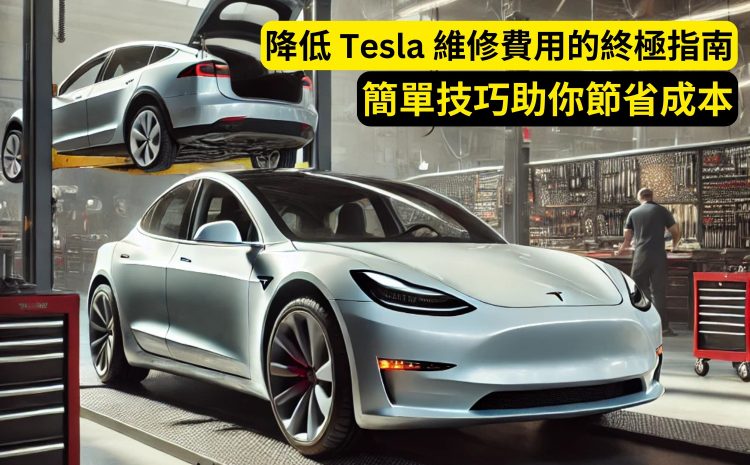
The Ultimate Guide to Reducing Tesla Repair Costs | Simple Tips to Help You Save
Tesla owners often face high repair costs, but by choosing the right services and using sound financial strategies, you can effectively reduce them. This article takes an in-depth look at how to vet third-party repair services, and how to use insurance and financial planning to reduce financial pressure, helping you manage repair spending with ease.
Trusted Third-Party Repair Options
How Do You Find a Qualified Third-Party Repair Service?
When choosing a third-party repair service, you need to consider the following key points:
Certification: Check whether the repair centre holds Tesla certification or relevant professional qualifications.
User reviews: Read online reviews and owner feedback to ensure consistent service quality.
Transparent pricing: Choose a provider that offers a detailed repair list and quote, so you can avoid hidden fees.
Third-Party Repairs vs Official Service
Price advantage: third-party repair services are often better value than official repairs, especially for minor repairs or servicing. Quality assurance: some third-party services may lack original parts, so you need to weigh cost against quality.
Time efficiency: third-party repairs may offer faster turnaround, making them particularly suitable for minor faults.
Avoid the Pitfalls of Poor Repair Services
Beware of the lure of low prices: prices that are too low may indicate poor-quality service or counterfeit parts. Check the business licence: confirm that the repair centre is legitimate and avoid black-market operations.
Review the contract carefully: before signing any repair agreement, check the terms closely to avoid extra fees.
Using Insurance and Financial Strategies to Reduce Repair Costs
How Can You Use Car Insurance to Cover Repair Costs?
Choose insurance with broad cover: for example, an extended insurance plan that includes vehicle breakdown repairs.
Claims tips: understand the insurance claims process and make sure the damage meets the policy terms.
Comparing insurance plans: compare products from multiple insurers and choose the most cost-effective option.
How Should Owners Build a Repair Fund?
Set a monthly savings target: it is recommended to set aside 2% of your total income each month.-5% as a repair reserve fund.\r\n\r\nDedicated savings account: Deposit this money into a separate savings account to prevent it from being used for other purposes.\r\n\r\nFlexible savings ratio: Adjust the savings plan according to your vehicle’s actual repair needs.
Is purchasing an extended warranty worth it?
Cost-benefit analysis: Calculate whether the price of the extended warranty matches the potential repair costs.\r\n\r\nApplicable models and age: Based on the vehicle’s age and expected risk of failure, decide whether to purchase an extended warranty.\r\n\r\nOfficial vs third-party comparison: Official warranties offer more security, but third-party plans may be more flexible.\r\n\r\n
Trusted third-party repair options
How to find a qualified third-party repair service?
When looking for a qualified third-party Tesla repair service, choosing a trusted and professional repair centre is key. This not only saves costs but also ensures your vehicle maintains optimal performance. Here are several practical tips to help you make an informed choice:
Certification and qualifications
Confirming whether the repair centre has Tesla certification or other relevant professional qualifications is the first step.\r\n\r\nTesla-certified repair centre: Some third-party repairers may have obtained official Tesla certification, allowing them to use original parts and follow official repair standards.\r\n\r\nTechnical professional certification: Such as ASE certification (Automotive Service Excellence), indicating that technicians possess a high level of repair skills. Repair experience: Choose an organisation with extensive experience in electric vehicle repair, especially repairers specialising in Tesla models.
User reviews
Checking feedback from other car owners is an effective way to assess the quality of repair services.\r\n\r\nOnline reviews: Browse Google reviews, Facebook car owner groups, Carosell or dedicated Tesla owner forums to learn about the repairer’s reputation and customer experience.
HK Tesla Repair Centre | Hong Kong Hong Kong
car_repair_57433756 is on Carousell
Word-of-mouth recommendations: Ask other Tesla owners for recommended repair centres, especially well-known local establishments.\r\n\r\nComplaint records: Check whether the repairer has consumer complaints or a poor record to ensure you choose a reliable service.
Transparent pricing
Choose a service provider that offers clear, detailed repair quotes to avoid unnecessary extra costs.
Detailed breakdown: Repairers should provide itemised costs for each service, including parts costs and labour charges. Avoid hidden fees: Avoid organisations that give vague quotes or add charges after the repair.
Compare multiple providers: Contact several repairers to compare prices and choose the service with the best value for money.
Choosing a qualified third-party repair service can effectively reduce Tesla repair costs, but you need to do your homework on certification, reviews and transparency. By screening for trustworthy service providers, owners can not only save money but also ensure their car always remains in the bestcondition.
NowWhatsAppContact us for a free repair quote
Third-Party Repairs vs Official Service
When choosing a Tesla repair service, owners often have to choose between official service and third-party repairs. The following compares the two options across price, quality and efficiency, helping you understand their pros and cons and make the best choice for your needs.
Price Advantage
Third-party repairs usually offer better value for money, especially for repairs to less serious issues or routine maintenance.
Lower third-party repair costs: Because official repairs require Tesla original parts and follow strict standards, their costs are higher. By comparison, third-party repair centres can usually offer more affordable alternatives.
Suitable for minor repairs: For example, when replacing tyres, brake pads or carrying out simple electrical repairs, choosing a third-party service can save a significant amount.
Long-term assurance with official repairs: For repairs involving core components (such as the battery or motor), official repairs may cost more but offer greater assurance.
Quality Assurance
Quality differences are a key factor to weigh carefully when choosing a repair service.
Advantages of official service: Official repair centres use only Tesla original parts, and the work is carried out by Tesla-trained technicians, ensuring repair quality and vehicle performance.
Variables with third-party services: Some third-party repair centres may lack Tesla original parts; using aftermarket parts may affect long-term performance. However, certified third-party repair centres can strike a good balance between cost and quality.
Adapting to different needs: if your aim is to reduce repair costs and the problem does not involve core functions, a third-party service will be more practical.
Time efficiency
Processing efficiency is also an important factor affecting your choice, especially when you need your car urgently.
Flexibility of third-party services: many third-party repairers offer flexible appointments and shorter waiting times, making them more efficient for replacing parts or dealing with minor faults.
Systematic checks with official repairs: official service may take longer, but it will carry out a comprehensive inspection, avoiding potential problems from arising.
Choose according to your needs: if time is tight and the problem is simple, a third-party service is more suitable; if an in-depth inspection or major repair is required, official service is more reliable.
Third-party repairs and official service each have their pros and cons, and car owners should weigh them up according to their specific needs when choosing. For value for money and flexibility in
minor repairs, a third-party service is a good choice; whereas official repairs have the advantage in quality assurance and comprehensive inspections. Based on your vehicle’s condition and individual needs, find the most suitable repair solution to keep your Tesla in optimum condition at all times.
Avoiding the pitfalls of poor repair services
When choosing repair services for your Tesla, avoiding poor repair services is key to ensuring the safety and performance of your vehicle. Below, we explain how to effectively identify and avoid common repair pitfalls, helping car owners steer clear of potential risks.
Beware of the lure of low prices
Many poor repair service providers use extremely low prices to attract car owners, but this is often the beginning of a trap.
A low price may mean low quality: services priced far below the market average may use inferior or counterfeit parts, which not only fail to solve the problem but may even cause secondary damage to the vehicle.
Lack of transparency: these providers may add hidden charges after the repair, such as fees for parts replaced without your consent or unnecessary inspection charges.
Recommendation: choose a repair service that provides transparent quotations, and ask in detail about the work involved and the costs payable, so that you do not suffer a loss simply because a price looked attractive.
Review the repair contract and its terms in detail
Before the repair formally goes ahead, signing a contract is an important step in safeguarding the rights of both parties, and it requires particular care.
Avoid vague clauses: check whether the contract contains unclear or ambiguous terms, such as charges that are “subject to circumstances”, as these could become grounds for additional fees later on.
Watch out for additional charges: make sure all possible extra costs (such as labour and parts) are clearly listed, and avoid being charged extra fees that have not been approved.
Recommendation: read the terms carefully before signing, confirm any doubts with the service provider immediately, and seek legal advice if necessary, so as to avoid unnecessary losses.
By staying wary of low-price lures, verifying that a repair centre is legitimate and reviewing the repair contract in detail, owners can effectively avoid the traps of poor repair services. Choosing a professional provider with a good reputation may cost a little more, but it ensures the long-term health and safety of your car, keeping your Tesla performing at its best at all times.
Using insurance and financial planning strategies to reduce repair spending
How can car insurance cover repair costs?
Making sensible use of car insurance is an effective way to reduce Tesla repair costs. Understanding your policy’s cover and the claims process can help owners obtain the greatest possible protection when something goes wrong with the vehicle. The following sections explain how to choose suitable insurance and make full use of its cover.
Choose insurance with broad cover
A comprehensive insurance policy is the foundation of an owner’s repair protection.
Extended warranty plans: consider choosing an extended warranty that includes vehicle breakdown repairs, for example a plan covering battery damage and electronic system faults. Although these plans cost more, for The repair needs of high-tech electric vehicles such as Tesla are very practical.
Additional insurance clauses: some insurance products provide extra cover, such as compensation for natural disasters or collision damage. These additional clauses can
prevent the high costs brought about by accidents.
Recommendation: When purchasing insurance, understand its coverage in detail and choose a plan that suits your own driving environment and usage needs.
Tips for making a claim
Mastering the insurance claims process is the key to obtaining compensation quickly.
Understanding the claim conditions: insurance policies usually set out which types of damage meet the claim criteria; for example, damage caused by natural wear and tear or negligence may not be covered. Read the terms carefully to ensure your application complies with the rules.
Prepare sufficient evidence: when applying for a claim, you need to provide relevant documents, such as repair reports, photos or invoices. Complete evidence can speed up the approval process.
Recommendation: After an accident occurs, notify the insurance company as soon as possible and work with the repair centre to provide the necessary information, so as to avoid delays in the procedure
and the resulting increase in repair costs.
Comparing insurance plans
Choosing the most cost-effective insurance plan is the only way to reduce repair costs in the long term.
Balancing price and cover: a low premium may mean limited coverage, so you need to choose an appropriate plan based on your own vehicle usage.
Comparing multiple companies: the products offered by different insurance companies may differ significantly in terms and price. Utiliseinsurance comparison tools to analyse from multiple angles.
Recommendation: Do not focus only on the insurance price; you should also consider factors such as the insurance company’s reputation, claims efficiency and additional cover clauses.
Effectively using car insurance to cover repair costs can not only reduce financial pressure, but also enhance the car owner’s peace of mind while driving. Choose a suitable insurance product and become familiar with its claimsprocess, which will help you handle Tesla’s repair needs with greater ease and enjoy a more cost-effective driving experience.
How should car owners set up a repair fund?
Establishing a dedicated repair fund is an important financial strategy for effectively reducing the pressure of Tesla repairs. Through a systematic savings plan, owners can more comfortably handle unexpected repair expenses while avoiding financial strain. Below are specific implementation methods and suggestions.
Set a monthly savings target
To better manage repair expenses, owners need to incorporate a repair fund savings plan into their daily financial planning.
Recommended proportion: Depending on income, save 2% of total monthly income-5% as a repair fund, which will not affect quality of life and can gradually accumulate funds.
Calculation method: Assuming monthly income is HK$30,000, it is recommended to save monthly HK$600 to HK$1,500 as a repair reserve
fund.
Key implementation point: Treat this savings amount as a fixed expense, prioritising it over other spending to ensure the stability of the savings plan.
Dedicated savings account
Setting up a dedicated repair fund account helps to manage funds separately from other savings and prevents them from being misappropriated.
Open a separate account: Choose a high-interest savings account or flexible time deposit plan, so that funds can earn extra returns while accumulating. Automatic transfer function: Set up a monthly automatic transfer to ensure the repair fund is deposited on time, reducing manual intervention risk.
Avoid early withdrawal: Unless it involves repair-related expenses, you should avoid using these funds, to ensure they are dedicated to vehicle repairs.
Flexibly adjust the savings proportion
Owners should flexibly adjust their monthly savings proportion according to the actual repair needs and age of the vehicle.
Early-stage vehicle: New cars usually have lower repair needs, so the savings proportion can be appropriately reduced, using more funds for other priorities.
Aging stage: As the vehicle ages, repair needs may increase, and at this point the savings proportion should be gradually increased, to prevent possible high expenses.
Sudden adjustment: If you have experienced a high-cost repair, you can increase your savings efforts in the short term to fill the fund gap.
By establishing and improving a repair fund, owners can cope more calmly with Tesla vehicle repairs and reduce financial pressure. At the same time, this planned savings habit can also improve overall financial management skills, providing solid protection for future uncertainties.
Is an Extended Warranty Worth Purchasing?
Purchasing an extended warranty plan is one way many Tesla owners consider reducing long-term repair costs, but is it really worthwhile? Below, we analyse it from the perspectives of cost-effectiveness, vehicle model suitability and comparison of different plans to help owners make informed decisions.
Cost-Benefit Analysis
The main purpose of an extended warranty plan is to reduce the risk of high repair costs, but owners must first understand its cost-effectiveness.
The cost of an extended warranty: the price of an extended warranty varies depending on the vehicle model and plan details, typically ranging from HK$15,000 to
HK$30,000.
Potential repair costs: for example, battery or motor repairs may exceed HK$50,000, and an extended warranty can cover such major expenses, avoiding unexpected financial burdens.
Whether it is worth it: if the vehicle is approaching the end of its standard warranty period and future repair risks are relatively high, an extended warranty may be a cost-effective choice.
Applicable Vehicle Models and Age
Whether an extended warranty plan is worth it depends on the vehicle model, age and the owner’s driving habits.
Vehicle model: certain models (such as high-performance versions) have higher repair costs, making an extended warranty more valuable.
Age and mileage: an extended warranty is suitable for vehicles approaching the end of their standard warranty and with mileage exceeding 100,000 km. Driving environment: if the vehicle is often driven in harsh road conditions, mechanical wear is greater, and the protection offered by an extended warranty is more evident.
Comparison of Official and Third-Party Plans
When choosing an official or third-party extended warranty plan, you need to compare them based on service content and flexibility.
Advantages of an official warranty:
Genuine parts protection: official warranties use original parts, giving greater assurance of repair quality.
Nationwide service network: warranty service is available at any official service centre, suitable for owners who frequently drive across regions. Flexibility of third-party plans:
Lower cost: third-party plans are usually more competitively priced.
Customisation options: some plans allow owners to choose specific coverage, such as powertrain or electronic components only.
Points to note: when choosing a third-party plan, you need to confirm repair quality and whether original parts are used, to avoid unnecessary risks..
Whether buying an extended warranty is worthwhile requires a trade-off based on the owner’s financial situation, vehicle condition and repair needs. Through a detailed cost-benefit analysis, suitability assessment and comparison of different options, owners can better ensure their car’s performance remains stable over the long term and effectively keep repair costs under control.