
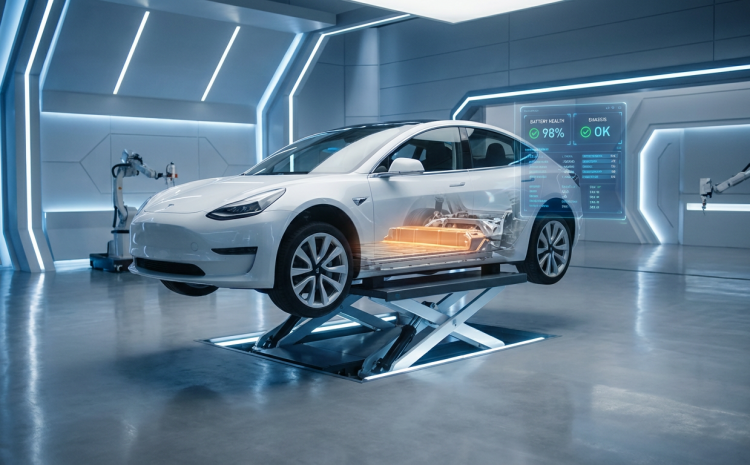
Buying a Used Tesla Without Fear of a Dud! 2025 Pre-Purchase Inspection: 5 Key Points (Battery, Accident History, Chassis)
Thinking of buying a used Tesla but worried about ending up with a ‘dud’? Especially in 2025, as the electric vehicle market becomes increasingly mature, there are more and more used Teslas to choose from. But how can you ensure that the car you buy is healthy and free from hidden problems? Don’t want to discover a major issue only after the warranty period has expired? Today, we HK Tesla Repair has carefully prepared the most comprehensive guide to used Tesla pre-purchase inspections, focusing on the 5 essential checkpoints, including battery health, signs of accident damage, chassis structure and more, helping you shop wisely and buy with confidence!
With the growing popularity of electric vehicles, Tesla, as an industry leader, has seen its used-car market become increasingly active. Many car owners want to get their desired Tesla model at a better price. However, buying and selling used cars always carries certain risks, especially for electric vehicles with complex structures and high value. A professional, detailed inspection guide is vital to protecting buyers’ interestsThis is essential. We understand your concerns, so in this article we will combine years of Tesla repair experience with the latest market information to provide you with the most practical and professional advice.
Whether you are buying an electric vehicle for the first time or are an experienced car owner, this guide will be your best companion. We will explore in depth the importance of each inspection point, the potential risks and the practical methods involved. After reading this article, you will have a deeper understanding of how to verify a used Tesla, enabling you to make a wiser purchasing decision. Ready to become a savvy used Tesla buyer? Let’s start our inspection journey together!
Professional used Tesla inspections that ensure your investment is worthwhile.
One. Understanding the importance of second-hand Tesla vehicle inspection: why 5 major key points cannot be ignored?
In 2025, buying a second-hand Tesla is no longer a novelty, but many people may overlook the importance of an inspection or not know what should be checked. Here, “inspection” is not just about seeing whether the car’s exterior looks good; it is about gaining a deeper understanding of the vehicle’s “health”, especially the core components of an electric vehicle. If the inspection is not thorough enough, it is highly likely thatyou could end up buying a car with numerous problems, and the repair costs could easily exceed the price of the car itself — truly painful!
1.1 Avoid potentially high repair costs
Tesla’s battery and motor are both expensive components. If you buy a second-hand car with severe battery degradation and potential motor problems, future repair costs could be a headache. For example, if the battery’s State of Health (SOH) falls below a certain level, this may mean a significant reduction in range, or even that the battery needs to be replaced, whichcould easily cost hundreds of thousands of Hong Kong dollars! At HK Tesla Repair, we often come across such cases: many owners only discover battery problems after buying the car because the inspection was not thorough enough, and regret it deeply.
1.2 Ensure driving safety and reliability
A Tesla with signs of a serious accident, a damaged chassis or problems with the suspension system could pose a threat to the driving safety of you and your family. For example, a vehicle that has been involved in a serious collision may have suffered permanent damage to its internal structure even if the exterior has been repaired well, affecting handling and safety. Ensuring that the vehicle’s structure is intact and that all systems are operatingnormally is the most basic requirement.
1.3 Safeguard the vehicle’s long-term value
A well-maintained second-hand Tesla with no major hidden problems will naturally hold its value better. If you buy a car with hidden faults, even if the initial price is attractive, its value may be significantly reduced when you sell it in future. Carrying out a thorough pre-purchase inspection is like taking out insurance for your investment, ensuring that your money is well spent.
1.4 Understand the vehicle’s true condition
Sometimes sellers may not proactively disclose all of a vehicle’s issues. A professional inspection gives you a more comprehensive and objective picture of the vehicle’s true condition, including its previous repair and servicing history, and any potential hidden faults. This helps you judge the vehicle’s actual value and whether it is worth buying.
II. A detailed breakdown of the 5 key inspection points for a used Tesla(2025 latest version)
All right, now that we’ve covered why this matters so much, let’s get to the point! The following 5 key points are absolute must-checks when buying a used Tesla. We’ll break each one down, show you how to inspect it, and explain what to look out for.
2.1 Battery Health Check
As the heart of an electric vehicle, the battery’s condition directly affects the vehicle’s driving range, performance and lifespan. This is absolutely the most important element!
2.1.1 Why is battery health so crucial?
The Tesla battery is one of the most expensive components. Battery state of health (SOH) naturally degrades over time and with use. The lower the SOH, the smaller the battery’s actual capacity and the shorter the driving range. For example, a car with a battery SOH of only 70% may have an actual driving range of only 70% of what it was when new, which, for daily commuting or long-distance travel, can cause significant inconvenience. Moreover, a low-SOH battery may indicate internal cell damage, with a higher risk of repairs in future.
2.1.2 How can you check battery health?
Method 1: Using Tesla’s official diagnostic tool (professional operation required)
- The most accurate method is to use Tesla’s dedicated diagnostic computer, connect it to the vehicle’s ECU and read the battery management system (BMS) data. This can provide detailed data on the battery’s SOH, charging cycles, temperature changes and more.
- This method usually requires a professional repair centre to carry out the operation, such as our HK Tesla Repair which provides this professional service.
Method 2: Monitor the driving range and charging performance
- Pay attention to the estimated driving range displayed by the vehicle and compare it with the official figures for a new car of the same model. However, note that the displayed range is affected by factors such as driving habits, weather and tyre pressure, so this is only a preliminary reference.
- While charging, pay attention to the charging speed and how long it takes to reach a full charge. If charging is unusually slow, or the estimated range after a full charge is far lower than expected, these may be signs of a battery problem.
- Try carrying out a full charge and full discharge test (if time permits), recording the actual energy taken on a full charge and the range achievable after a single full charge.
Method 3: Third-party apps or OBD readers
- Some third-party apps on the market (for example, ScanMyTesla and Tessie) can read certain battery data, including SOH, through the OBD port. Bear in mind, however, that the accuracy of this data may not match that of official tools, and some features may require payment.
- When using them, make sure the app you choose is reputable and designed specifically for Tesla.
Expert tip: Even if the vehicle’s displayed SOH is still relatively high, keep an eye on the battery’s degradation curve. If degradation is unusually rapid, or if individual modules show severe overheating or overcooling, these are potential risks. We contact HK Tesla Repair, and we can provide you with a professional battery inspection service so that you can buy with confidence.
Battery health directly affects a Tesla’s range and performance.
2.2 Accident Traces and Body Structure Inspection
A Tesla that has been through a serious collision may have compromised internal structure and safety, even if the surface repairs look good. This is an important factor affecting both the vehicle’s value and its safety.
2.2. 1 Potential risks
- Loss of structural integrity: A serious collision may deform or fracture key structures such as the chassis, longitudinal beams and A/B/C pillars, affecting the vehicle’s overall rigidity and its ability to absorb impact.
- Airbag system failure: If the airbag system is not repaired properly after an accident, the airbags may fail to deploy correctly in future, putting lives at risk.
- Other hidden damage: A collision may damage wiring, the radiator, the cooling system and other components inside the body; these may not be obvious at first but can cause problems later on.
2.2. 2 How can you check for accident traces?
Step 1: Inspect the bodywork carefully
- Colour differences and panel gaps: Check whether the gaps between body panels (for example, doors, bonnet and tailgate) are even and symmetrical. If a gap is too large, too small or not symmetrical, it may indicate previous panel beating or replacement.
- Paint spraying: Check that the gloss and colour of the body paint are consistent. Look for uneven paint, paint runs, pinholes or trapped foreign matter. You can try shining a torch on the surface to check how even the paint finish is.
- Glass and sealant: Check that the production date markings on all windows are consistent. If one piece of glass has a clearly different date, or shows signs of recent replacement, the glass may have been replaced, which could indirectly indicate an accident. Check that the sealant around the doors and windows is intact and free from damage or signs of re-sealing.
- Lights and bumpers: Check that the lights, front and rear bumpers, wings and other components are securely fitted and free from obvious scratches, cracks or signs of repair.
Step 2: Check the inside of the doors, bonnet and tailgate
- Open the doors, bonnet and tailgate, and check the door hinges, edges, inner weld points and similar areas. Look for signs of welding, filler, or loose or re-tightened screws.
- Check the rubber seals along the door edges for deformation, damage or signs of re-adhesion.
Step 3: Check the underbody and suspension structure
- If conditions allow, it is best to raise the vehicle and carefully inspect the longitudinal rails, crossmembers, suspension components, driveshaft and other parts underneath. Look for deformation, dents, scratches, oil leaks or signs of non-original welding.
- Pay particular attention to the main load-bearing structures at the front and rear, such as the frame rails, and check for obvious deformation, repairs or signs of welding.
Step 4: Check the airbag warning light and service records
- Start the vehicle and observe the airbag warning light on the dashboard. If the light stays on and does not go out, or flashes, it indicates a problem with the airbag system.
- Ask the seller for the vehicle’s service records where possible, to find out whether it has had any major accident repairs.
Expert tip: Even a minor collision can affect the vehicle’s structure. We HK Tesla Repair We provide a professional vehicle structure inspection service, using professional equipment and experience to reveal the true condition of the vehicle and help you avoid buying an accident-damaged vehicle.
Carefully inspect body panel gaps and paintwork to determine whether there are signs of accident damage.
2.3 Chassis and suspension system inspection
The chassis is the foundation of the vehicle, while the suspension system affects handling and comfort. Damage in these areas not only affects the driving experience but may also be a safety hazard.
2.3.1 Potential risks
- Chassis oil leaks or corrosion: If there are oil leaks from the chassis (for example, transmission or differential oil), or severe corrosion, it means components may be aged or damaged and require expensive repairs.
- Suspension component wear: Wear to suspension components such as shock absorbers, springs, ball joints and linkages can cause abnormal noises while driving, vague handling, longer braking distances and even affect wheel alignment.
- Uneven tyre wear: If tyres show abnormal wear (for example, severe wear on one side), there is a high chance of a problem with the suspension system or wheel alignment.
2.3.2 How to inspect?
Method 1: Visual inspection (requires lifting the vehicle)
- Oil leaks and seepage: Carefully inspect all chassis components, including the powertrain, drive shafts, shock absorbers and braking system, to see whether there are any signs of oil stains, seepage or leaks.
- Corrosion and damage: Inspect metal components such as the chassis plates, frame rails and suspension arms for severe corrosion, deformation, or dents and scratches caused by physical impact.
- Shock absorber condition: Check the exterior of the shock absorbers for oil leaks and whether the rubber dust covers are damaged.
Method 2: Test drive assessment
- Abnormal noises: Under different road conditions (for example, when passing over speed bumps, potholed roads or turning), pay attention to whether there are abnormal noises from the chassis, such as knocking, rattling or metallic grinding sounds.
- Handling stability: In a safe environment, try accelerating, decelerating and turning. Feel whether the vehicle’s handling is stable and responsive, and whether there is excessive body roll when cornering.
- Braking performance: When testing the brakes, check whether the vehicle pulls to one side or exhibits abnormal vibration.
Method 3: Inspect the tyres
- Check whether the tread wear on all four tyres is even. If one tyre is particularly badly worn, or shows “sawtooth” wear, these are warning signs of suspension or alignment problems.
Expert tip: Inspecting the undercarriage requires a certain level of professional knowledge and tools. If you are not familiar with it, it is best to seek help from a professional repair centre, such as the services of HK Tesla Repair The scope includes a detailed undercarriage inspection. We can provide you with a professional assessment to ensure that the vehicle you buy has an intact undercarriage structure and a suspension system that operates correctly.
Undercarriage inspections must not be overlooked, as they affect driving safety and comfort.
2.4 Motor and drivetrain
Although the motor structure of an electric vehicle is relatively simple, its operating condition still needs to be checked to ensure there are no potential problems.
2.4.1 Potential risks
- Abnormal motor noise or reduced performance: The motor should run smoothly and quietly. If there is abnormal noise, vibration, or acceleration performance that is noticeably worse than expected, there may be internal damage to the motor.
- Drivetrain problems: Although Tesla uses single-speed or two-speed transmissions, components such as drive shafts and universal joints can still wear, causing abnormal noise or uneven power delivery.
2.4.2 How to check?
Method 1: Pay attention to sound and performance during a test drive
- During acceleration, deceleration and high-speed driving, listen carefully to the sound of the motor running, ensuring it is smooth and free from abnormal noise.
- Feel whether the vehicle’s acceleration response is responsive and powerful.
Method 2: Inspect drivetrain components (vehicle must be raised)
- Check the motor housing for signs of oil leakage or damage.
- Inspect components such as drive shafts and universal joints for wear, deformation or insufficient lubrication.
Method 3: Read data using diagnostic tools
- Professional diagnostic tools can read the motor’s operating data, such as temperature, current and voltage, to determine its working condition.
Expert tip: Motor repair costs are usually relatively high, so they must be taken seriously. We at HK Tesla Repair provide professional motor maintenance and inspection services to ensure your vehicle’s powertrain operates well.
2.5 In-car electronic systems and software checks
Tesla is known for its advanced in-car electronic systems, but these systems can also be a potential source of problems, especially in used cars.
2.5.1 Potential risks
- Screen display issues: Abnormal display on the central touchscreen or instrument panel—for example, unresponsive touch, lagging visuals or a black screen—can seriously affect the driving experience.
- Software bugs or outdated software: Outdated in-car software may cause some functions to stop working properly, or may contain security vulnerabilities.
- Other electronic equipment faults: Examples include faults with electronic equipment such as Autopilot sensors, door locks, audio systems and air-conditioning systems.
2.5.2 How to check?
Step 1: Test all screen functions thoroughly
- Start the vehicle and test whether the central touchscreen responds promptly and accurately.
- Try operating all functions, such as navigation, music playback, air-conditioning controls and vehicle settings, and check for lag, crashes or functions that cannot be operated.
- Check that the instrument panel display is clear and functioning normally.
Step 2: Check the software version and updates
- Check the version of the in-car software and find out when it was last updated.
- If the software version is older, you can ask the seller whether it can be updated, or consider updating it yourself.
Step 3: Test other electronic equipment
- Test the Autopilot function (if the vehicle is equipped with it) and check whether the sensors are working properly.
- Test all electronic equipment, including door locks, window controls, mirror adjustment, audio systems and air-conditioning systems.
- Check whether any electronic system fault warning lights are illuminated on the instrument panel.
Expert tips: Repairs to in-car electronic systems are usually relatively complex and expensive. If you find a problem, it is best to seek help from a professional Tesla repair centre. We HK Tesla Repair have extensive experience in electronic system diagnostics and can resolve a wide range of software and hardware problems for you.
Tesla’s electronic systems are complex, so checks must be carried out carefully.
III. Additional Advice and Trends for Buying a Used Tesla in 2025
In 2025, there are still many things worth noting when buying a used Tesla. As technology continues to develop, new problems and solutions will continue to emerge.
3.1 Focus on battery replacement and maintenance policies
Tesla’s battery warranty policy has certain age and mileage limits. When buying a second-hand car, you should clearly understand whether the vehicle’s battery is still within its warranty period and what the warranty covers. You should also note Tesla’s official policy and costs for battery replacement. Sometimes, the cost of replacing the battery may make the appeal of buying a second-hand car significantlyreduced. We HK Tesla Repair provide battery health checks and related consultations to help you understand the battery’s true condition.
3.2 Understand the common issues of different models
Different Tesla models may have different ‘common issues’. For example, early Model S cars may experience air suspension problems, and Model 3 may have draught problems around the doors. Before buying, do your homework and learn about the common issues of the target model; this will help you inspect the car in a more targeted way.
3.3 Seek assistance from a professional repair centre
If you are not familiar with car repairs, or want to ensure the inspection is accurate, we strongly recommend seeking assistance from a professional electric vehicle repair centre. We at HK Tesla Repair have extensive Tesla repair experience and are equipped with professional diagnostic tools and a technical team. We can provide a comprehensive vehicle inspection service and ensure that you buy a second-hand Tesla with no hidden problems. We do not charge an inspection fee and can provide an instant quotation, so you can clearly understand the potential repair costs.
3.4 Consider used car insurance and extended maintenance
After purchasing a used Tesla, you may consider buying additional used car insurance or an extended maintenance plan to provide cover against possible future repair costs. This extra protection can allow you to enjoy the driving experience of an electric vehicle with greater peace of mind.
3.5 Data records and reports
When carrying out a vehicle inspection, try to record all the issues you observe, including photographs, videos and written descriptions. If you hire a professional to carry out the inspection, make sure to obtain a detailed inspection report. This report can serve not only as a basis for your purchasing decision but also as reference material for future repairs.
IV. Common pitfalls and solutions when buying a used Tesla
Although we have already provided a detailed inspection guide, there are still some pitfalls in the market that require your particular attention.
4.1 Concealing accident history
Pitfall: The seller may deliberately conceal that the vehicle has previously been involved in a major accident, emphasising only that its exterior looks good.
Solution: Use the body structure inspection methods we mentioned above to look carefully for tell-tale signs. At the same time, you can check the vehicle’s repair records and accident reports through third-party vehicle report services (such as Carfax and AutoCheck — although these may not be widely used in Hong Kong, keep an eye out for similar local services).
4.2 Exaggerated battery health
Pitfall: The seller may claim that the battery health is very high, when in fact it has already degraded significantly.
Solution: Always use professional diagnostic tools or methods to check the battery’s SOH, and do not rely on verbal assurances. If the seller is unwilling to let you carry out a professional inspection, be on your guard.
4.3 Hidden mechanical or electronic faults
Pitfall: The seller may know that the vehicle has mechanical or electronic faults but choose not to disclose them.
Solution: Carry out a thorough test drive and functional checks, listen carefully for any unusual noises and watch for any abnormal warning lights. Engaging a professional EV repair centre to carry out a full inspection is the most effective approach. Our HK Tesla Repair professional team can provide you with an accurate diagnosis.
4.4 Price does not reflect actual value
Pitfall: The vehicle’s asking price is far higher than its true market value, or it includes potential repair costs.
Solution: Carry out market research beforehand to understand the average market price for Tesla vehicles of a similar model, year and condition. Factor in potential repair costs before deciding whether the purchase is worthwhile.
Five: Tools and Resources for Buying a Used Tesla in 2025
When buying a used Tesla, making good use of the right tools and resources can save you considerable time and effort.
5.1 Professional Tesla Repair Centre
As mentioned earlier, a professional repair centre is your most reliable partner. We HK Tesla Repair offer a full range of Tesla repair services, including detailed pre-purchase inspections, helping you avoid buying a problematic car. Our free inspection and instant quotation services give you a clear picture of the repair costs involved.
5.2 Third-Party Vehicle Inspection Services
Although relatively uncommon in Hong Kong, it is worth checking whether any independent third-party vehicle inspection services are available on the market. They usually have professional equipment and experience to provide you with an objective report.
5.3 Tesla-specific diagnostic software and OBD readers
For buyers familiar with automotive technology, you may consider purchasing Tesla-specific diagnostic software or an OBD reader to carry out a preliminary inspection yourself. Please note, however, that using these tools requires a certain level of technical knowledge and cannot fully replace the judgement of a professional.
5.4 Tesla owner communities and forums
Joining online Tesla owner communities or forums can give you access to a wealth of ownership experience, maintenance insights and information about specific models. You can also ask other owners about their purchasing experience and advice.
5.5 Car repair guides and tutorial videos
There are plenty of online tutorial videos and articles about Tesla repairs and inspections. Although they cannot fully replace a professional inspection, they can help you gain a basic understanding of the inspection process.
FAQ – Common questions about buying a used Tesla:
- Q: What is the biggest concern when buying a used Tesla?
A: The biggest concern is buying a vehicle with severe battery degradation, a history of major accidents, or hidden mechanical or electronic faults, as repair costs could be very high. - Q: At what battery health level would you advise against buying?
A: It is generally considered that if the battery SOH is below 70-75%, you should pay particular attention, because the driving range will be noticeably reduced and the risk of needing a battery replacement in future increases. The specific threshold can be adjusted according to individual needs and budget. - Q: Can I inspect the car myself?
A: If you have a considerable understanding of vehicle structure and electric vehicle technology, you can carry out a preliminary inspection. However, to ensure accuracy and avoid missing anything, it is strongly recommended that you engage a professional Tesla repair centre to conduct a comprehensive inspection. - Q: Which used Tesla model is the safest choice?
A: Newer models usually come with more advanced technology and battery management systems, but they may also be more complex. It is advisable to do thorough research and understand the common issues, advantages and disadvantages of each model. - Q: What can I do if I find a problem with the vehicle?
A: If a problem is found during the inspection stage, you can try negotiating the price with the seller, or simply walk away from the purchase. If you have already bought the car and then discover a problem, contact a professional Tesla repair centre as soon as possible for assessment and repair.
Summary
Buying a used Tesla is certainly a smart choice, letting you own this groundbreaking electric vehicle at a more affordable price. However, as we have stressed in this article, detailed inspection steps and professional judgement are essential. Especially in 2025, with more and more choices appearing on the market, we need to stay vigilant and not overlook potential risks just because a price looks tempting.
At HK Tesla Repair, we are always committed to providing Tesla owners with the most professional and reliable repair service. Whether it is a battery health check, a body structure assessment or motor maintenance, we have extensive experience and professional equipment. Remember, when buying a used car, inspection is key! Don’t let a dud ruin your electric vehicle dream.
If you have any doubts about the used Tesla you have your eye on, or would like a comprehensive pre-purchase inspection, you are always welcome to contact us. We charge no inspection fee and can give you an immediate quote, helping you make the wisest decision.
Take action now!
Want to learn more about Tesla repairs, or need a professional inspection service? Visit our website now HK Tesla Repair, or simply contact us directly contact HK Tesla Repairand our professional team will be happy to help you!
Share this article with your friends and become savvy used Tesla buyers together!