
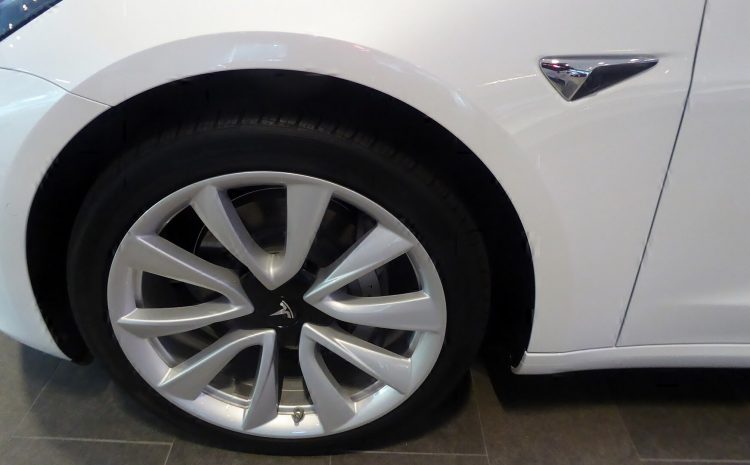
Tesla Brake Pads & Discs 2026: When to Replace, Thickness & Costs
Tesla Brake Pads & Discs Replacement Guide 2026: When to Change, Thickness Standards, 5 Warning Signs and Costs at a Glance
Plenty of Tesla owners ask the same question: “The car has never gone wrong, so do the brake pads and discs really need changing?” The answer is yes — they are consumables. Whether you drive a Model 3, Model Y or Model S, pads and discs wear with mileage and driving style. Once they drop below the safe limit, stopping distances lengthen, the pedal starts to judder, and at worst it is those few extra metres that decide the outcome. Hong Kong’s stop-start traffic, its steep slopes and the sheer weight of an EV (a Model Y tips the scales at around two tonnes) put far more strain on the braking system than most owners realise.
This guide sets out in one go: when Tesla brake pads and discs need replacing, what the factory thickness standards are, which warning signs to watch for, reference price ranges in Hong Kong, and everything you should know before the work is done. By the end you will know whether your car needs new brakes, when to act, and how to avoid being talked into an inflated bill.
💡 A quick note: there is no fixed replacement interval for brake pads and discs — no manufacturer will tell you “change them at X thousand kilometres”, because it depends heavily on whether you drive on the motorway or in town, and on how much you use one-pedal driving. The safest approach is a brake system inspection every one to two years, or every 20,000 km, with a technician measuring the actual thickness before anything is decided. Remember the principle: inspect first, quote second, work only starts once you approve — never agree to a replacement you have not seen measured.
Contents
- Tesla brake pads vs brake discs: what is the difference?
- When do brake pads need changing? 5 warning signs and thickness standards
- When do brake discs need changing? Thickness standards and how to judge
- What affects longevity: Hong Kong roads and one-pedal driving
- The replacement process, step by step: inspect, quote, approve
- Price reference: main dealer versus independent
- Four things to look for in a workshop: not everyone can handle an aluminium chassis
- Frequently asked questions (Q1–Q10)
Tesla Brake Pads vs Brake Discs: What Is the Difference?
Owners often talk about “brake pads” and “brake discs” as if they were one thing. They are two separate components, and they wear at very different rates and cost very different amounts to replace. Understanding the difference is the surest way to avoid paying for discs you never needed.
Brake Pads: The Fastest-Wearing Part
The pads are the friction material that clamps against the disc to slow the car, made up of a steel backing plate and a friction compound. Because they are the part that actually rubs against the disc every time you brake, they wear fastest of anything in the system. For most Tesla owners, front pads last roughly 30,000 to 60,000 km depending on driving habits — frequent town driving and little use of one-pedal mode will bring that forward considerably.
Brake Discs (Rotors): Once They Wear Thin, There Is No Saving Them
The disc is the metal rotor that turns with the wheel while the pads grip it to create friction. Discs wear thinner with use, and repeated heating and cooling can bring on surface oxidation, scoring and even warping. Unlike pads, a disc that has worn thin cannot simply be machined and refinished a few times — once it falls below the manufacturer’s minimum thickness it has to be replaced, or you risk it cracking.
Why Does an Electric Car Still Need Both Replaced?
Tesla cars have regenerative braking, so in theory the pads are used far less than on a petrol car. But two practical factors make “EVs never need brakes” a myth:
- High kerb weight: a Model 3 is around 1.8 tonnes, a Model Y close to 2 tonnes and a Model X heavier still, so the energy involved in stopping is just as great and the load on discs and pads is considerable;
- The last few metres rely on mechanical braking: regeneration handles most of the deceleration, but the low-speed stop at the end, emergency braking and ABS intervention in the rain are all genuine mechanical friction.
That is why the manufacturer still publishes clear thickness standards and replacement guidance; the system simply tends to last longer than on a conventional saloon. To understand how the whole system works, see our brake system repair service page.
When Do Brake Pads Need Changing? 5 Warning Signs and Thickness Standards
The old rule of thumb about a fixed mileage is unreliable. The most dependable measure is the remaining thickness of the friction material, read alongside the warning signs you notice day to day. If any one of the five below appears, book an inspection without delay.
Warning Sign 1: A Sharp Metallic Squeal When Braking
Most Tesla pads carry a wear indicator on the backing plate. Once the friction material thins to a certain point, the indicator scrapes against the disc and produces a continuous, high-pitched squeal. It is designed as a final notice: if you hear it, the pads are on the edge of replacement, so do not put it off.
Warning Sign 2: A Soft Pedal or Longer Travel
If a light touch used to stop the car and now you have to press much deeper before anything happens, the pads may be too thin — or there may be a brake fluid problem. Either way it is a safety item and needs checking at once.
Warning Sign 3: Vibration Through the Wheel or Pedal
A steering wheel that shakes under braking, or a pedal that pulses rhythmically, usually means the disc is uneven or badly scored, so the pads cannot bed evenly against it. This normally has to be dealt with as a disc job rather than a pad-only change.
Warning Sign 4: A Burning Smell in the Cabin
A burning smell after a long descent or repeated hard stops is normal. If it appears after light braking on the flat, though, the pads are probably overheating or a caliper is dragging, keeping pad and disc in constant contact and generating heat.
Warning Sign 5: A Wear Alert in the Car or the App
Some models show brake-related alerts on the instrument display or in the app, and the servicing section of the official Tesla app reports pad condition. An alert does not mean the pads must be changed immediately, but it does mean you should have them physically measured.
Thickness Standards: How Many mm Is Still Safe?
New pads usually carry around 10 to 12 mm of friction material (more if you include the backing plate). Industry practice and manufacturer guidance agree: replace once the friction material falls below about 3 mm, and treat anything under 2 mm as dangerous, with the metal backing plate liable to grind straight through the disc. Typical reference values by model:
| Model | New pad thickness (reference) | Recommended replacement limit (friction material) | Notes |
|---|---|---|---|
| Model 3 / Model Y | Approx. 10–12 mm | ≤ 3 mm (2 mm safety floor) | The front axle usually wears faster than the rear |
| Model S / Model X | Approx. 11–12 mm | ≤ 3 mm (2 mm safety floor) | Heavier cars, so a greater braking load |
| All models | — | Replace both sides of an axle together when thickness differs greatly | Uneven left-to-right wear points to a caliper problem |
These are general industry reference values; what counts is the measurement taken on your own car. Specifications vary by model year and brake package — the Performance variants, for example.
When Do Brake Discs Need Changing? Thickness Standards and How to Judge
Judging a disc is more straightforward than judging pads — two numbers decide it: thickness and thickness variation. The manufacturer’s minimum thickness (Min. TH) is stamped on the disc, often as something like “MIN TH 24mm”, and that is the safety red line.
How to Read Brake Disc Thickness Standards
- New thickness: Tesla front discs are commonly around 26 to 32 mm, depending on model and brake package;
- Minimum thickness (MIN TH): usually 2 to 4 mm less than new — a 26 mm disc might carry a 24 mm MIN TH;
- Replacement rule: if any single point measures below MIN TH it must be replaced. Machining it “for now” is not an option, because skimming leaves the disc thinner and less able to shed heat.
Three Disc Surface Problems You Can See Without a Caliper
- Deep scoring: run a fingernail across the face; a pronounced groove (deeper than 1 mm) suggests a pad has worn through or grit has got in;
- Blue-black heat marks: a bluish tint is oxidation from high temperature. Light discolouration is harmless; large patches combined with an uneven surface mean replacement;
- A rusty lip at the edge: Hong Kong’s coastal humidity makes edge rust normal on cars parked outside, but watch for rust thick enough to flake away and impair cooling.
Pads Only, or Pads and Discs? Three Cases Compared
| Situation | Recommended action | Reason |
|---|---|---|
| Pads thin, disc face flat and well above MIN TH | Replace the pads only | The disc still has plenty of life; no need to spend the extra |
| Pads thin, disc deeply scored or at MIN TH | Replace pads and discs together | New pads cannot bed flat to a worn disc — expect vibration and a short service life |
| Pads fine, but the wheel shakes under braking | Check disc flatness / consider replacement | A warped disc or excessive thickness variation |
Incidentally, if the inspection also turns up worn dampers or top mounts (heavy nose-dive under braking is a common clue), it makes sense to deal with both at once — see our suspension repair page and save yourself a second visit.
What Affects Longevity: Hong Kong Roads and One-Pedal Driving
Why do some owners still have pad left at 60,000 km while others need new ones at 20,000? The deciding factor is not whether the pads were counterfeit, but these four things:
Factor 1: Town Traffic Versus Motorway Cruising
Brake wear comes mostly from repeated low-speed stops. In Hong Kong’s urban traffic — Nathan Road, Gloucester Road, the roundabouts in every district — you brake several times as often as you would on a motorway, and an EV’s weight means every stop carries real energy. Owners who drive mainly in town will see noticeably shorter pad life.
Factor 2: How Much You Use One-Pedal Driving
The more work regeneration does, the less the mechanical brakes are used. Owners who keep one-pedal driving switched on and make good use of hill hold and creep settings typically get 30% to 50% more mileage from a set of pads. A habit of coasting and then braking hard at the last moment, by contrast, shortens the life of both pads and discs.
Factor 3: Vehicle Weight and Payload
Model Y and Model X are heavy to begin with, and with a full load of luggage or a trailer the braking system has to absorb even more energy. This is not a matter of driving style but of physics: there is no avoiding it, only regular inspection.
Factor 4: A Humid Coastal Climate
Hong Kong sits by the sea with high humidity, and many cars are parked on the street. Discs oxidise while a car stands, and on a vehicle used only every few days the surface rust will be thicker; a little noise and smell for the first few stops is normal. Left long term, though, corrosion speeds up surface wear. If your parking space is close to the waterfront, have the brakes checked a little more often.
💡 A quick note: if your car has gone more than 20,000 km without a brake inspection and you mostly drive in town, book a free inspection. Far better to know how much pad you have left than to wait for the warning squeal — inspect first, quote second, work only starts once you approve, and there is no pressure at all if you decide not to go ahead.
The Replacement Process, Step by Step: Inspect, Quote, Approve
Owners who have not been through it often worry: “will the workshop suddenly find a long list of faults once the car is on the ramp?” A proper process looks like this, and you should expect any workshop to follow it:
Step 1: Free Inspection and Measured Thickness
The technician removes the wheels and uses a vernier caliper or thickness gauge to measure the friction material on each pad, plus the thickness and variation at several points on every disc, then checks that the caliper slide pins move freely and tests the brake fluid for water content. The whole process takes about 20 to 30 minutes. You are entitled to watch the measurements being taken and see the readings — a genuine workshop will not mind in the least.
Step 2: A Proper Written or On-the-Spot Quote
After the inspection the workshop sets out which items need replacing, what the parts cost, what the labour comes to and whether anything else is needed. The decision is entirely yours at this point — you can have the pads changed and leave the discs, or take the quote away and decide later.
Step 3: Replacement and Bedding-In
Fitting new pads and discs is not the end of the job. A responsible workshop will bed them in: a series of moderate-force stops that mates the new pads to the disc face and builds up a transfer layer. For the first 200 to 300 km after collection you should avoid hard braking so the new components settle.
Step 4: A Check Before Handover
Test the brakes when you collect the car: light low-speed braking should be quiet, pedal travel should be consistent and the wheel should not shake. If anything feels wrong, ask for it to be rechecked there and then.
To see what a full inspection covers, look at our Tesla repair service page, or contact us to book.
Price Reference: Main Dealer Versus Independent
The question everyone asks is what a set of pads or discs will cost. Honestly, it depends on the model, the brand of parts and whether you are doing pads alone or pads and discs together, so the figures below are reference ranges only — the formal quote after inspection is what counts. Our principle is transparent pricing: every item listed separately, with no hidden charges.
Reference Price Ranges in Hong Kong (Parts and Labour)
| Item | Model 3 / Y reference range | Model S / X reference range | Notes |
|---|---|---|---|
| Front axle brake pads (one axle set) | Approx. HK$1,200–HK$2,800 | Approx. HK$1,800–HK$3,800 | Depends on OEM or quality aftermarket parts |
| Rear axle brake pads (one axle set) | Approx. HK$1,000–HK$2,500 | Approx. HK$1,500–HK$3,500 | The rear axle generally wears more slowly |
| Brake disc replacement (each, with pads) | Approx. HK$1,800–HK$3,500 | Approx. HK$2,500–HK$5,000 | Replace both sides of an axle together |
| Brake fluid change | Approx. HK$500–HK$1,000 | Approx. HK$600–HK$1,200 | Check water content every 2 years |
Reference ranges for the Hong Kong market in 2026, for budgeting only; the actual price depends on vehicle condition, parts choice and labour, and is confirmed in the formal quote after inspection.
Main Dealer or Independent — How to Choose?
| Comparison | OEM / main dealer parts | Quality aftermarket parts (certified brands such as Akebono, Brembo) |
|---|---|---|
| Price | Higher | Typically 20%–40% cheaper |
| Fit and specification | A 100% match to the original | Compliant brands are equally safe, but buy from a supplier you trust |
| Brake noise | Low | Variable — cheap unbranded pads tend to squeal |
| Warranty impact | No argument | Generally does not affect the new-car warranty (brakes are consumables), but keep the receipt |
Our advice: consider OEM or a first-tier brand for the front axle, where the load is highest, and decide the rear on budget. Above all, do not chase the cheapest price on unbranded, unmarked parts — brakes are the last line of defence, and the cost of getting it wrong here cannot be calculated.
Four Things to Look For in a Workshop: Not Everyone Can Handle an Aluminium Chassis
Tesla brake work sounds simple enough — “it is only a set of pads” — but there are plenty of details and specialist tools involved. These four points will help you pick a workshop that genuinely knows its way around a Tesla:
Point 1: Can They Handle Tesla Calipers and the Electronic Parking Brake?
Some Tesla rear axles use an electronic parking brake (EPB), and changing rear pads means retracting the caliper pistons with diagnostic equipment first; you cannot simply lever them back. A workshop without the right kit can wreck a caliper, turning a bill of a few thousand dollars into tens of thousands.
Point 2: Do They Have the Dedicated Tools and Diagnostic Equipment?
That means caliper piston retraction tools, a calibrated thickness gauge and a diagnostic computer to read brake system status and match the electronic parking brake. These are the basics of the job, not optional extras.
Point 3: Is the Quote Transparent, or Do Extras Appear Once the Car Is In?
The normal sequence is inspect first, quote second, work only with your approval. Be wary if the story changes the moment you arrive — “your pads are finished, the discs have to go too” — without measured figures and the disc faces to show you. A genuine specialist will explain the caliper readings rather than sell through fear.
Point 4: Is There Any After-Sales Support?
The first week or two after brake work is an observation period. A reputable workshop will tell you which noises or sensations should bring you straight back, rather than disowning the car once it has left the premises.
For more on how we quote and how our service works, see our suspension and brake system replacement page, or book an inspection with us directly.
Frequently Asked Questions
Q1: How often do Tesla brake pads need replacing?
There is no fixed interval. Owners who drive mostly in town usually need a check somewhere around 30,000 to 50,000 km, while those doing long motorway runs can go considerably further. The reliable approach is to have the thickness measured every one to two years and replace below 3 mm.
Q2: Tesla has regenerative braking, so do the pads never need changing?
No. Regeneration only reduces the number of brake applications; the final few metres of a stop, emergency braking and ABS in the rain all rely on the mechanical brakes. The system usually lasts longer than on a petrol car, but it does not last forever.
Q3: What happens when the pads wear right down? Is there any warning?
Usually a sharp warning squeal first, as the metal indicator scrapes the disc — that is the final notice. Ignore it and the friction material wears through, the steel backing plate scores the disc, the repair bill doubles and stopping distances lengthen noticeably. It is genuinely dangerous.
Q4: Can I change just the pads and leave the discs?
If the disc face is flat and the measured thickness is well above MIN TH, pads alone are perfectly fine. But with deep scoring, warping or a disc close to its minimum, new pads will not bed flat to the old surface; expect vibration and a short service life, so replace them together.
Q5: Do new brake pads need bedding in?
Yes. For the first 200 to 300 km avoid hard stops and make a series of moderate-force brake applications so the new pads form a transfer layer on the disc. Braking will then be more consistent and quieter.
Q6: How often does Tesla brake fluid need changing?
We recommend checking the water content every two years and changing the fluid once it exceeds 3%. Hong Kong’s humidity means fluid absorbs water readily, which lowers its boiling point and can make the pedal feel soft under sustained braking. For more, see our Tesla repair and servicing.
Q7: How long does a pad or disc change take?
A front axle set of pads is usually 45 to 90 minutes; with discs it is around 1.5 to 2.5 hours, depending on caliper condition and whether the electronic parking brake needs resetting. We can normally return the car the same day.
Q8: What is the difference between a main dealer and an independent workshop for brake pads?
Mainly price and waiting time. Dealer appointments are booked further ahead and labour rates are higher; a qualified independent Tesla specialist using parts of the same grade typically saves 20% to 40% and can usually do the job the same day. What matters is choosing a workshop with the right tools and transparent pricing.
Q9: The car says “brake pads need servicing” — must they be changed immediately?
The alert means the system has detected wear approaching the limit, not that replacement is due that minute. Book a physical measurement soon and let the thickness readings decide — sometimes cleaning up a caliper and a check is all that is required.
Q10: Does changing the pads affect the warranty?
Pads and discs are consumables, and normal replacement does not affect the new-car warranty. Keep the invoice and proof of where the parts came from so you have documentation if a question arises later. Fitting reputable third-party parts will not normally void the warranty either, provided they are compliant.
Not Sure How Much Pad You Have Left? Let Us Check It for You
HK Tesla Repair works exclusively on Tesla. Our brake system inspection is free of charge: we measure pad and disc thickness, check the calipers and test the brake fluid, then give you a written quote on the spot — work only starts once you approve. No pressure, no hidden charges.
- 🔧 Brake system repair service — pads, discs and fluid in one visit
- ⚙️ Tesla repair services overview — from batteries to bodywork and paint
- 📞 Contact us now — WhatsApp bookings and instant quotes
Remember: your brakes are the last line of defence for you and your family. Regular checks and early replacement are far better than regrets after the event.
Last updated: 25 October 2026 | Prices shown are reference ranges; the final figure is confirmed in the written quote after inspection.